How Do Chameleons Change Colour? The Real Story Behind This Amazing Animal
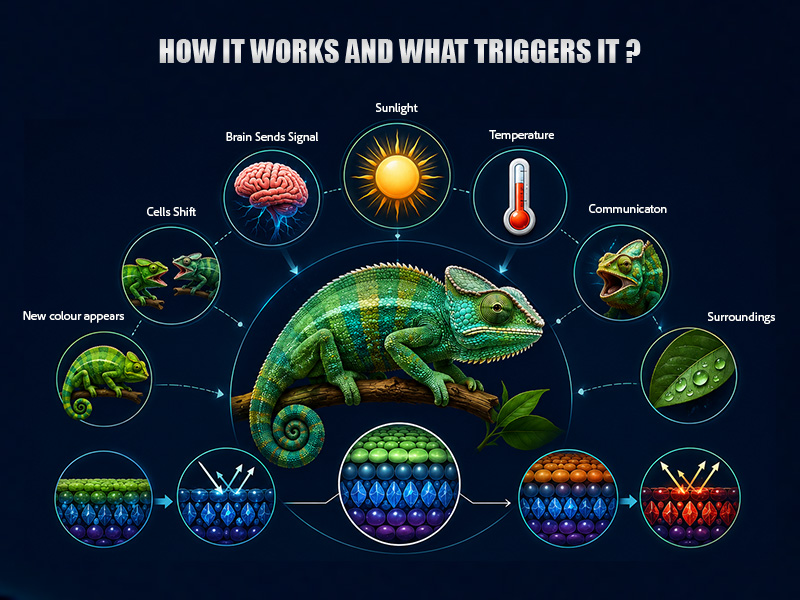
So, how do chameleons change colour? Chameleons are famous for their amazing ability to change colours within seconds. Many people think they do this only for camouflage, but the real reason is much more interesting. Their skin reacts to light, temperature, mood, communication, and survival needs. Special skin cells help them create different shades and patterns naturally.
Some chameleons become brighter when excited or darker when scared. This fascinating ability makes chameleons one of the most unique animals in nature.
How Chameleons Change Colour
Now, let us come to the big question: how do chameleons change colour?
Many people think chameleons simply absorb colours from their surroundings like a sponge. But that is not what really happens. Inside a chameleon’s skin are special layers of cells called chromatophores. These cells contain different pigments and tiny crystal-like structures. When the chameleon’s body reacts to emotions, temperature, light, or danger, these cells change position and reflect light differently. That is what creates different colours.
In simple words, the chameleon is not “painting” itself. Its skin is changing the way light reflects from the body.
For example:
Relaxed chameleons may appear green or light shades
Angry chameleons may turn darker or brighter
Scared chameleons may show different patterns
Cold temperatures may make colours darker
Excitement can make colours brighter
So colour change is actually connected to the chameleon’s mood, body condition, and environment.
How Do Chameleons Change Colours So Fast?
One thing that surprises people is how quickly the colour change happens. The answer is that their skin cells react very quickly to signals from the nervous system and hormones.
When a chameleon feels stress, excitement, fear, or even attraction toward another chameleon, its brain sends signals to the skin almost immediately. The tiny crystals inside the skin shift position and start reflecting different wavelengths of light. This makes the colours appear to change rapidly. Sometimes the change happens within seconds.
For example, imagine two male chameleons facing each other. One may suddenly turn brighter or darker to appear stronger and more threatening.
The colour shift happens fast because it is part of communication and survival.
Do Chameleons Change Colour to Blend In?
This is probably the biggest myth about chameleons. Yes, sometimes camouflage plays a small role, but it is not the main reason. Movies often show chameleons perfectly matching every object around them, like turning into a rainbow chair or a colourful wall. Real chameleons do not work exactly like that.
Most chameleons change colour mainly because of the following:
Mood
Body temperature
Communication
Stress
Fear
Mating behavior
Sunlight
Camouflage can help them stay safer from predators, but it is only one part of the story. For example, a chameleon sitting on a branch may stay green because it already matches the leaves naturally. But if it becomes angry or scared, the colours may change even if the surroundings stay the same. So the colour change is more about what the chameleon is feeling than copying objects around it.
What Is It Called When a Chameleon Changes Colour?
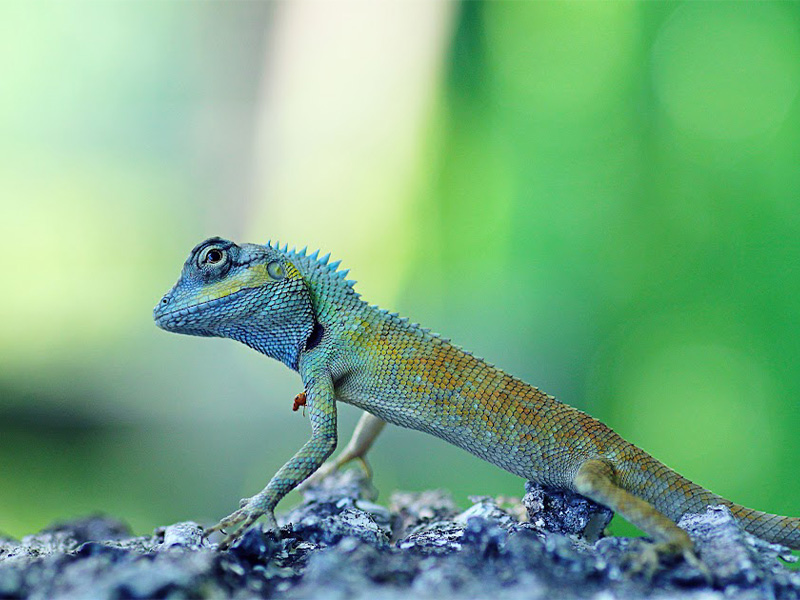
People often ask, "How do chameleons change colour and what’s this process called? The process is usually called colour change or physiological colour change. This happens because special skin cells in the chameleon’s body react to light, temperature, mood, stress, or communication. Scientists describe it as changes in skin pigments and light reflection caused by special skin cells.
That may sound complicated, but the basic idea is simple: the skin changes how it reflects light. This process helps chameleons communicate and react to their environment. So, the scientific name is usually physiological colour change, but most people simply call it a chameleon changing colour.
Do All Chameleons Change Colour?
Not all chameleons change colour in the same way. Some species can show dramatic colour shifts, while others only change slightly. Some chameleons only show small colour changes, while others can quickly switch between bright shades like green, yellow, red, or blue.
The ability depends on the species, age, mood, temperature, and environment. Male chameleons usually show stronger colour changes than females, especially during communication or the mating season. So, all chameleons can create dramatic colour changes. For example:
Some chameleons mainly change between green and brown shades
Others can show bright yellow, blue, red, orange, or turquoise colours
The ability depends on the species, age, health, mood, and environment. So yes, most chameleons can change colour, but some are much more colourful than others.
Are Colour-Changing Chameleons Real?
Yes, absolutely. Sometimes people think colour-changing chameleons are exaggerated by cartoons or movies. But they are completely real. Scientists have studied this ability for years, and many species genuinely change colours in front of our eyes.
The colours may not always perfectly match every background like in cartoons, but real chameleons can still create amazing colour shifts. If you ever watch videos of chameleons slowly turning from green to bright yellow or dark brown, those changes are real.
Nature itself is already impressive enough without needing movie effects.
How Does a Chameleon Know What Colour to Change?
This is one of the most interesting questions. How do chameleons change colour and know what colour to change to?
The chameleon’s body reacts automatically based on signals from the brain and nervous system. The animal does not sit there “thinking” about choosing colours like picking clothes. Instead, the body responds naturally to emotions, temperature, light, or nearby animals.
For example:
Fear may trigger darker shades
Sunlight may trigger lighter shades
Anger may create stronger patterns
Relaxation may bring softer colours
The nervous system controls the process automatically.
How Long Does a Chameleon Take to Change Colour?
People also ask, "How do chameleons change colour, and how long does a chameleon take to change colour? Some chameleons start changing shades almost instantly when they feel excited, angry, or scared or notice temperature changes. Bright colour changes may take a little longer depending on the species and situation. For example:
Sudden fear may trigger a fast colour change.
Temperature changes may happen more slowly.
Mood-based changes may continue for longer periods.
Some colours stay only briefly, while others remain until the situation changes.
Can Chameleons Control Their Colours Fully?
Their colour changes mostly happen naturally because of mood, temperature, light, stress, communication, or danger. Special skin cells react automatically and help the chameleon become darker, brighter, or show different patterns.
Chameleons do have some control, but much of the process is automatic. It works similarly to humans blushing when embarrassed or sweating in the heat. The body reacts naturally without full conscious control. The chameleon’s emotions and environment strongly affect the colours.
Why Chameleons Fascinate People So Much
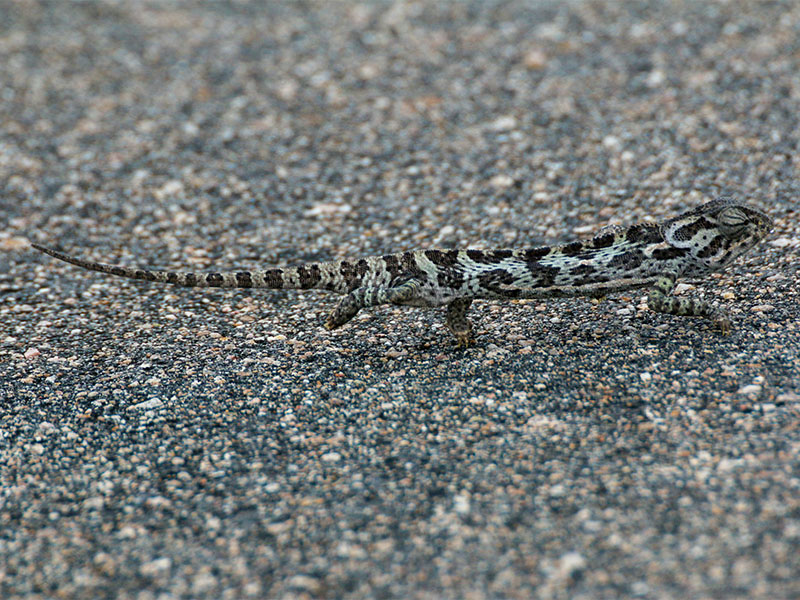
How do chameleons change colour? Humans naturally become curious about unusual animals, and chameleons are full of unusual features.
They have:
Eyes moving in different directions
Sticky, fast tongues
Slow, careful walking
Colour-changing skin
Strong gripping tails and feet
Everything about them feels different from ordinary animals. That is why people of all ages find them interesting.
Do Baby Chameleons Change Colour Too?
How do chameleons change colour? Yes, many baby chameleons can change colours too. However, younger chameleons may not show colours as strongly as adults. Young chameleons usually have softer colours like green, brown, or yellow. As they grow older, their colour-changing ability becomes more powerful and noticeable.
Baby chameleons mainly change colour because of temperature, mood, light, or stress, not just for camouflage. Some species start showing bright colour changes after a few months, especially males during the communication or mating season.
Can Chameleons Change Into Any Colour?
No, not every colour. Despite what cartoons show, chameleons cannot become every single colour imaginable. Many people think chameleons can become any colour like a rainbow, but that is a myth. Most chameleons can only change between the colours their skin naturally contains, such as:
Most species stay within natural colour ranges like
Green
Brown
Yellow
Black
Orange
Blue
Red
The colours depend on the species and skin structure, mood, light, temperature, and surroundings. Some chameleons become brighter when excited and darker when angry or scared. So, chameleons do not turn into every possible colour, but they can still create amazing colour changes.
What Happens If a Chameleon Cannot Change Colour Properly?
Health problems, stress, poor temperature, or sickness can affect colour changes. A weak or unhealthy chameleon may appear dull, dark, or faded for long periods. Pet owners often watch colour changes to understand how their chameleon is feeling. Bright, healthy colours usually suggest the animal is comfortable.
Do Chameleons Change Colour While Sleeping?
Yes, many chameleons change colours during sleep. Many chameleons become lighter or paler at night when they are asleep. Some may turn soft green, yellow, cream, or pale shades depending on the species. This happens because their body relaxes and their skin cells respond differently in darkness and cooler temperatures.
Sleeping colours may help with temperature control or rest. It can look surprising because the sleeping colours may be completely different from daytime colours.
Can Chameleons See Their Own Colours?
Scientists believe chameleons can see colours very well, including colours shown by other chameleons. This helps them communicate during fights, mating, and social behaviour. Colour signals are important for understanding each other.
Chameleons have very strong eyesight and can see many colours, including ultraviolet light that humans cannot see. Because they can look at their own body, scientists believe they are able to notice their colour changes too. This helps them during communication, especially when showing bright colours to attract mates or warn other chameleons.
Interesting Facts About Chameleons
Here are some fun facts many people do not know:
Chameleons can move each eye separately
Their tongues can be longer than their bodies
Some species change colours more dramatically than others
Most chameleons live in warm climates
Their feet are designed for gripping branches
Colour changes can happen in seconds
Nature really created one of the most unique reptiles on Earth.
What Scientists Still Study About Chameleons
Even today, scientists continue learning new things about colour-changing skin. Researchers study:
How light reflection works
How emotions affect colours
Communication patterns
Skin structure
Evolution of colour change
As technology improves, scientists understand more details about these amazing reptiles. They are also studying how chameleons may inspire new technology, such as colour-changing materials and smart camouflage systems.
Conclusion
So, how do chameleons change colour? They do it using special skin cells and tiny crystal structures that reflect light differently. The process is controlled by the nervous system and affected by mood, temperature, stress, communication, and surroundings.
As we can see, chameleons do not simply change colours to copy every background around them. Their colours are actually a form of communication and survival. Whether they are showing fear, trying to attract a mate, warming up in sunlight, or reacting to danger, their skin tells a story without words. The next time you see a colour-changing chameleon, you will know there is real science happening behind those incredible colour shifts.
Want to learn more about interesting science facts explained in simple language? Follow SkillSnap Learning for easy-to-understand content, smart learning tips, and amazing facts from around the world.