Why Are Veins Blue If Blood Is Red? Causes & Meaning
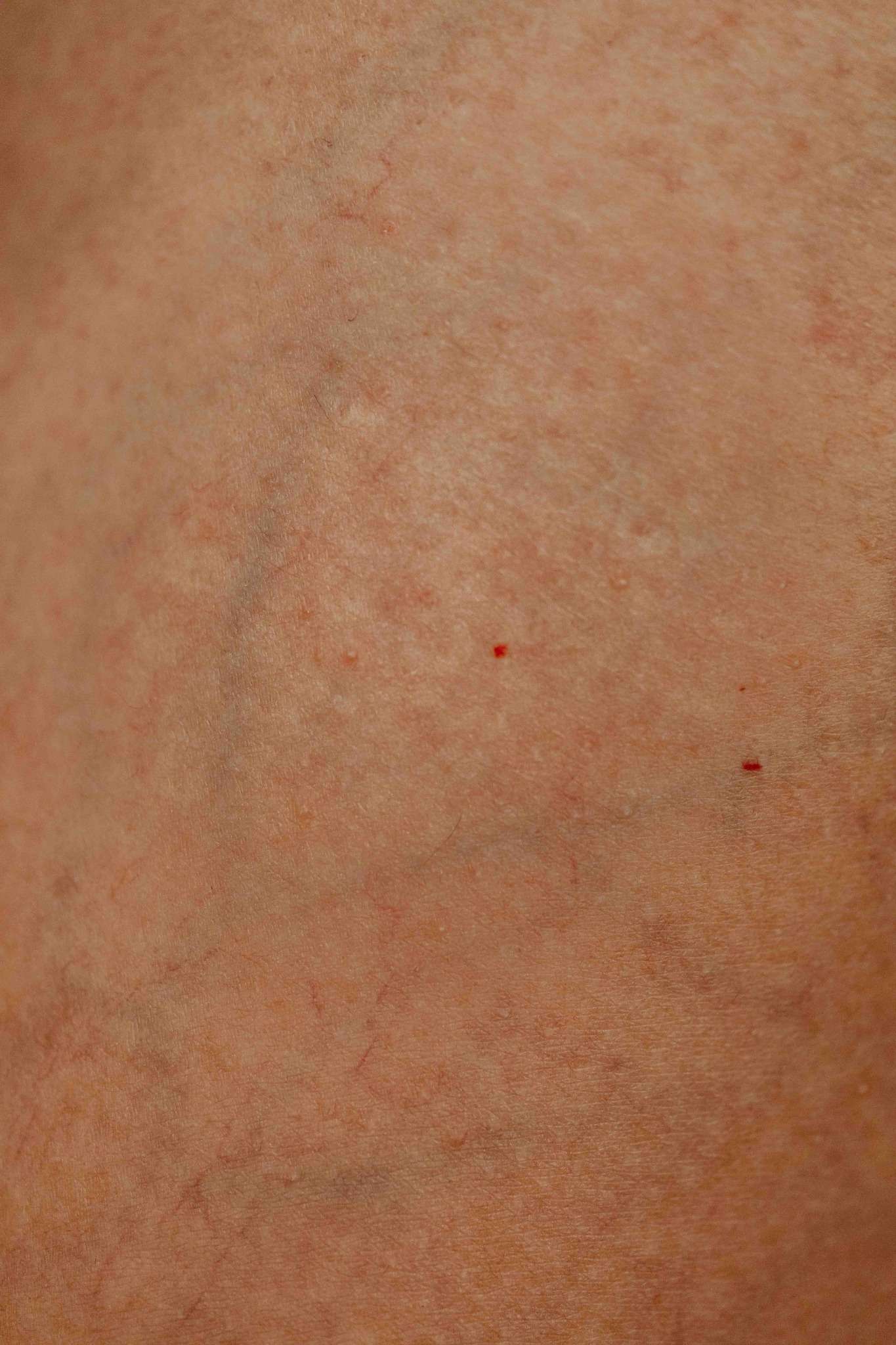
If you have ever wondered, “Why are veins blue?”, you are not alone. Look at your wrists right now. You will see those faint, bluish lines running just beneath the surface. You have probably stared at them your whole life and accepted the explanation: veins carry deoxygenated blood, and deoxygenated blood is blue.
But are veins blue because of Deoxygenated Blood? It sounds reasonable. It sounds like science. And it has been repeated so many times in so many classrooms that it feels like a settled fact. But it isn’t. Your blood is not blue. It has never been blue. Not once, at any point in your body. So if that’s true, what exactly are you seeing when you look at those veins? The answer is strange, and honestly more interesting than you would expect.
Why Are Veins Blue And What Colour Is Blood, Actually?
Blood is red, always. The colour comes from Haemoglobin, a protein inside your red blood cells that carries oxygen from your lungs to the rest of your body using iron. When iron binds with oxygen, it turns a bright scarlet red. That is the blood in your arteries, heading out fresh after every heartbeat.
When that blood drops off its oxygen and returns through your veins, the haemoglobin changes shape slightly. The result is a deeper red, more crimson, but still red. This is why: “Why are veins blue?” is such a common question. They look blue from the outside, but the blood inside tells a completely different story.
Why Are Veins Blue And How Are They Different From Arteries?
The difference is surprisingly simple: arteries carry oxygen-rich blood away from your heart. Veins bring the used-up blood back. Both are Blood Vessels, and both carry red blood. The confusion about “Why are veins blue and arteries red?” comes from textbook diagrams. To make them easier to read, arteries are drawn in red and veins in blue. That is a label, not the actual colour of the blood. Generations of students looked at those diagrams and assumed the blood itself was blue. This is another reason “Why are veins blue?” became a stubborn myth to break.
Why Are Veins Blue But Sometimes Green?
The answer to Why are veins blue? does not lie in the blood inside. It is about how the light travels through your skin.
Red light has a longer Wavelength, and hence it reaches deeper into tissue. Blue light has a shorter wavelength and scatters much more strongly near the surface. Your veins sit 1-3 millimetres below the skin. Red light reaches them and gets absorbed by haemoglobin; less of it returns. So, more scattered blue light reaches your eyes from the area above a vein. Your brain reads that as blue.
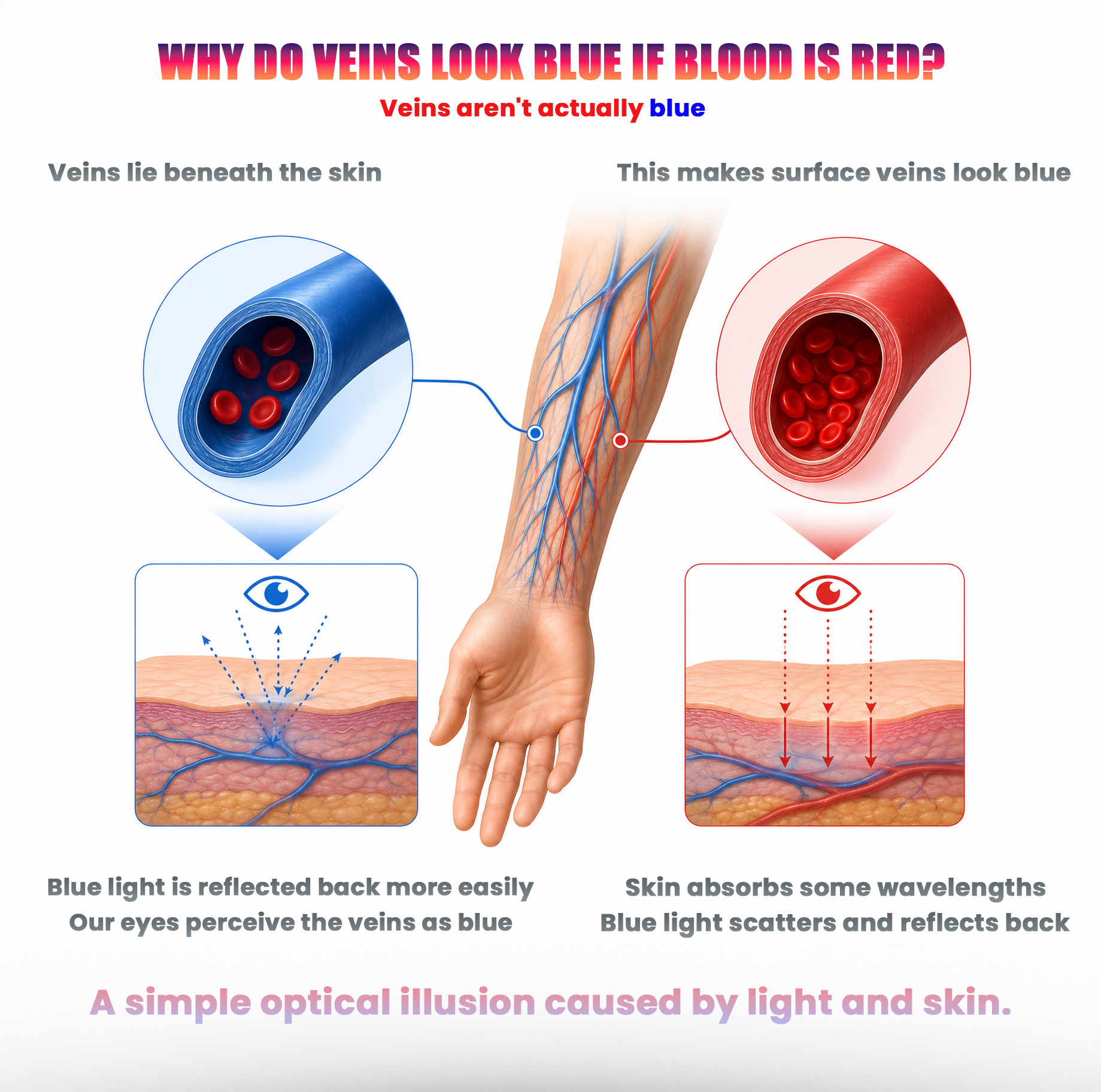
Green veins work the same way, just with slightly different conditions. Vein depth, skin tone, lighting, and colour perception can shift the colour towards Green. People with more melanin in their skin often see greener veins because melanin changes how light is absorbed and scattered through the skin. So when people ask: “Why are veins blue or green?”, it usually comes down to depth, melanin and the way light scatters, not blood colour.
When Should You Actually Worry About Your Veins?
Most of the time, blue or green veins are normal and harmless. But your veins do give off signs when something is off. Here is what to watch for:
A vein that is red, warm to the touch, or tender could signal inflammation or a clot.
Veins that bulge out and look twisted, especially on the legs, may be Varicose.
Unusual bruising around a vein with no injury is worth a doctor’s visit.
If your veins are hard to see and you feel thirsty or lightheaded, you may be Dehydrated.
Did You Know? Some Animals Actually Have Blue Blood
While we have been figuring out: Why are veins blue in humans, some animals like horseshoe crabs, Octopuses, and spiders have genuinely blue blood. They use haemocyanin, a copper-based molecule, instead of iron-based haemoglobin. Copper turns blue when it binds with oxygen. Horseshoe crab blood is used to test vaccines and medicines for bacteria all over the world. Completely blue, completely real, while keeping people safe every single day.
Conclusion
Your blood is always red. What you see on your wrist is a trick of light: red light gets absorbed by Haemoglobin, blue light bounces back, and your brain calls it blue. Green just means the vein is deeper or your skin has more Melanin. So the next time someone asks, "Why are veins blue?”, you have got the answer- it is light physics.
Ready to make studying easier and fun? SkillSnap Learning offers dedicated courses for Classes 6-10. Whether you are looking for NCERT Solutions or structured Q&A Practice, everything is available in one place.