Dog Star Sirius: Everything About the Brightest Star in the Sky
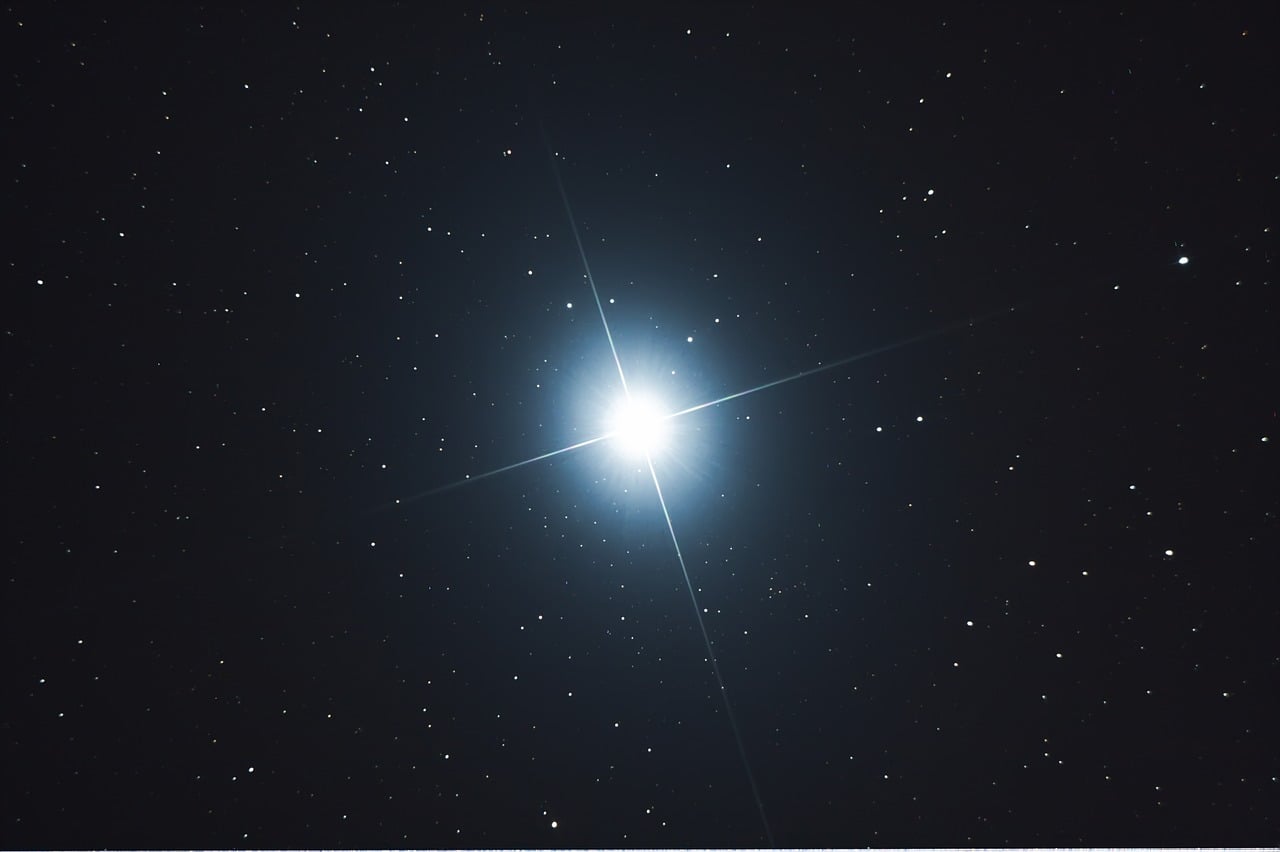
If you have ever stepped outside on a clear winter night and spotted one star that just looks completely different, brighter, sharper, almost unreal, that is Sirius. The brightest star in the sky, Sirius, sits in the constellation Canis Major, about 8.6 light-years from Earth. With an apparent magnitude of −1.46, it shines nearly twice as brightly as Canopus, the runner-up. Civilisations from ancient Egypt to Greece have looked to it for centuries. Whether you are new to stargazing or just scientifically curious, here is everything worth knowing about the star that rules our night sky.
What Makes Sirius The Brightest Star In The Sky?
Brightness is not just about size; it is about everything that makes its light reach us the most. Here is exactly why Sirius sits at the top:
At 8.6 light-years away, it is one of the Sun’s closest stellar neighbours.
Sirius A, its main component, is roughly twice the mass of our Sun and about 25 times more luminous.
Its surface temperature is approximately 9,940 Kelvin, significantly hotter than the Sun’s ~5,500 Kelvin.
There are far brighter stars elsewhere in the galaxy, but none of them appears as dazzling from Earth.
Key Facts About Star Sirius
Star Sirius is in reality a binary system, two stars, not one. A few things worth knowing before you go looking for it:
Star System: Sirius A (main-sequence star) + Sirius B (white dwarf companion)
Constellation: Canis Major
Apparent Magnitude: −1.46
Distance from Earth: 8.6 light-years
Surface Temperature: approximately 9,940 Kelvin
Mass: Approximately twice that of the Sun
Notable: Sirius B is often considered the very first white dwarf star ever discovered
Top 10 Brightest Stars In The Sky
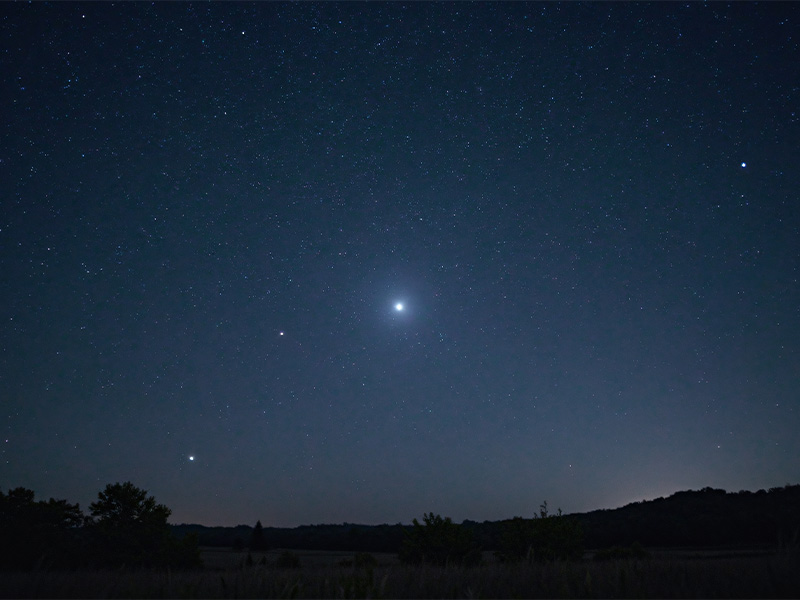
Before you head out with a telescope, here is the full list of the top 10 stars ranked by apparent magnitude, the lower the number, the brighter the star:
Rank | Star | Contellation | Approx Magnitude |
1 | Sirius | Canis Major | -1.46 |
2 | Canopus | Carina | -0.74 |
3 | Arcturus | Boötes | -0.05 |
4 | Vega | Lyra | +0.03 |
5 | Capella | Auriga | +0.08 |
6 | Rigel | Orion | +0.13 |
7 | Procyon | Canis Major | +0.34 |
8 | Betelguese | Orion | +0.42 |
9 | Achernar | Eridanus | +0.46 |
10 | Altair | Aquila | +0.76 |
The Brightest Star In The Sky: Dog Star Sirius
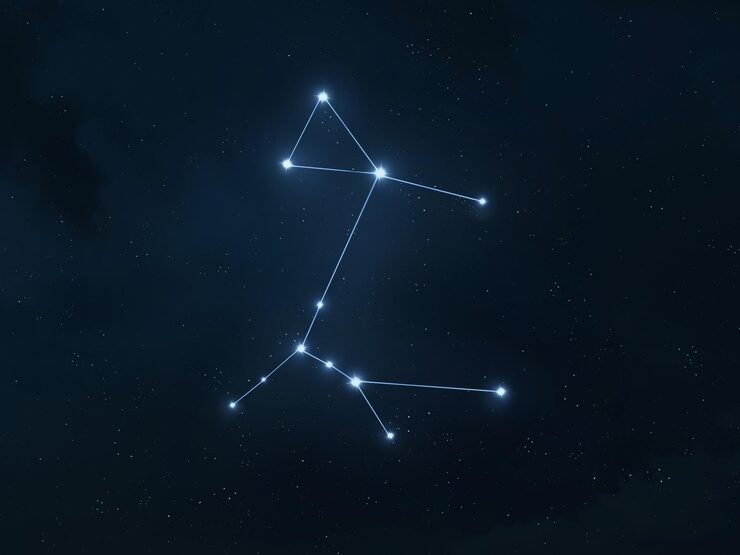
Dog star Sirius gets its famous nickname from Canis Major, Latin for “the Greater Dog.” But there is a lot more to the story than just a name.
Ancient Egyptians tracked the moment Sirius first appeared on the eastern horizon just before sunrise, using it to predict the annual flooding of the Nile. They built their entire calendar around this event. The Greeks, meanwhile, believed its summer appearance brought the hottest weather of the year, giving us the expression “ dog days of summer, ” a phrase still very much alive today.
Is Sirius the North Star?
No, and this mix-up happens more than you would think. Here is the difference:
The North Star is Polaris, sitting in Ursa Minor, not Canis Major.
Polaris barely moves in the sky because it lines up almost directly with Earth’s North Pole.
Sirius rises and sets every night and is visible from both sides of the equator.
Polaris is the star navigators have always relied on to find north, not Sirius.
Did You Know? Sirius is slowly drifting closer to Earth. Astronomers predict it will serve as the southern hemisphere’s Pole Star around the year 66,270 AD. Not soon, but worth knowing.
Conclusion
The brightest star in the sky is not just a stunning sight; it has shaped calendars, inspired myths, and helped people navigate oceans for thousands of years. Star Sirius is a binary system, not a planet, and definitely not the North Star. Astronomy has a way of making the world feel both small and enormous at the same time.
Don’t let your learning stop here. Visit SkillSnap Learning and choose our programs for Classes 6-10 to build a real foundation. Go through our blog for concepts that keep you curious and access free NCERT Solutions to get exam-ready today.