Are Bats Blind? Facts About Bat Vision and Night Flying
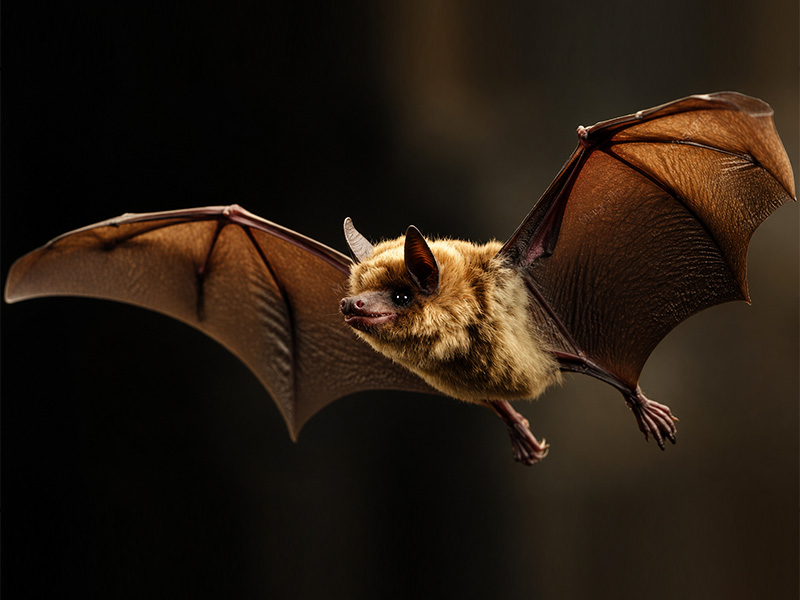
I sometimes think, “Are bats blind?" Most people have heard the phrase “blind as a bat” at least once. Because bats come out after dark and move so quickly at night, many assume they cannot see. The truth is much different from the old saying.
Bats are not blind at all. They have eyes, they can see, and many species actually have very good vision. What makes bats special is that they do not rely only on eyesight. They also use echolocation, which helps them travel and hunt in the dark.
For years, bats have been misunderstood. Movies, stories, and myths turned them into mysterious nighttime animals, which only added to the confusion. In reality, bats are intelligent creatures with abilities perfectly suited for survival.
Are bats blind? No, and Here’s Why
Do all of us think, "Are bats blind?" The idea that bats are blind is completely wrong. Scientists have studied bats for years and found that all bat species can see to some degree. Their eyesight works differently depending on their environment and lifestyle.
Most bats are active during the night, so their eyes are naturally better adapted for low light rather than bright sunshine. This helps them move around after sunset when many predators are inactive.
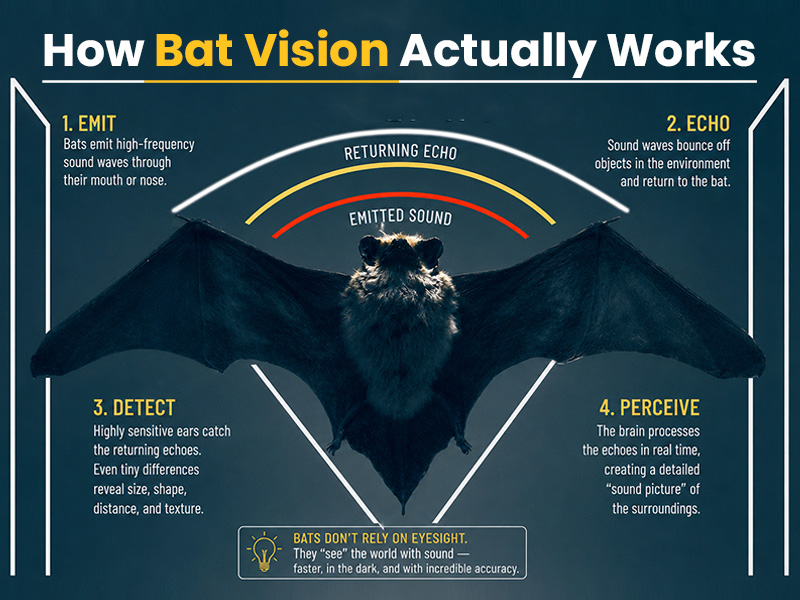
Besides vision, bats use echolocation. They make high-pitched sounds that bounce off objects nearby. The returning echoes help them understand where things are around them.
Some people mistakenly think bats use sound because they cannot see. That is not true. Echolocation is more like an extra navigation system that works alongside their eyesight.
Can Bats See In Daylight?
One of the biggest questions people ask is, Are bats blind, or can bats see in daylight? Yes, they can.
Bats do not become blind when the sun comes up. Their eyes still function during the daytime. However, since most species are nocturnal, they usually spend daylight hours resting in dark and quiet places.
Bright sunlight is not dangerous to bats, but it is outside their normal routine. Staying hidden during the day also protects them from larger birds and predators.
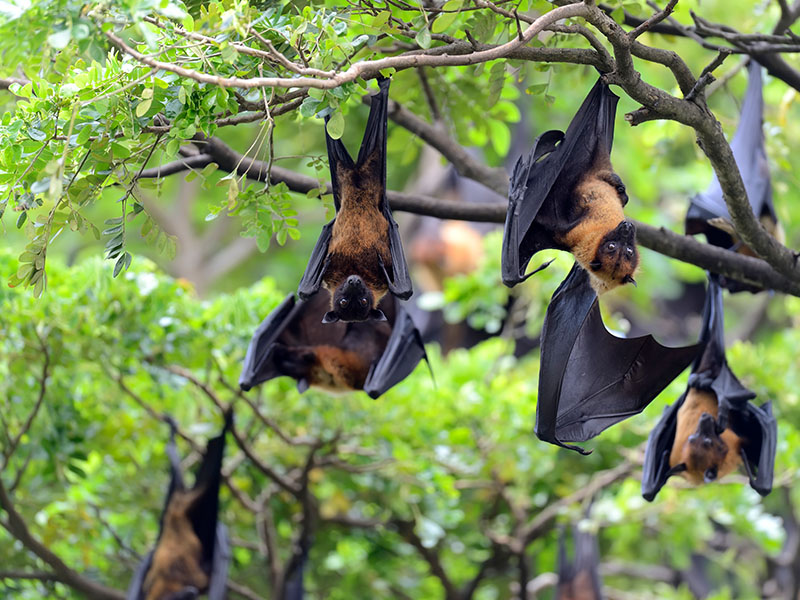
Some species, especially fruit bats, depend heavily on vision. These bats often have larger eyes and can see very clearly, even during early morning or evening light. Fruit bats use their eyesight to locate food like fruit, nectar, and flowers.
So while bats may avoid daylight, they are fully capable of seeing when the sun is out.
Are Bats Blind at Night?
If there is one time bats perform best, it is at nighttime. So when people ask, Are bats blind at night, the answer is definitely no.
Bats are built for nighttime activity. Their vision works well in dim conditions, and their echolocation gives them an added advantage in complete darkness.
A hunting bat can fly through trees, avoid obstacles, and catch tiny insects while moving at high speeds. That level of precision would not be possible if bats were actually blind.
Researchers have even discovered that bats can detect objects thinner than a strand of hair through sound reflections.
This combination of eyesight and echolocation makes bats some of the most skilled nocturnal animals in the world.
Why Do People Say Bats Are Blind?
The phrase did not come from science, like "Are bats blind?" It came from a misunderstanding. Long ago, people noticed bats flying only after sunset. Since humans struggle to see in the dark, many assumed bats must also have poor vision. Because bats moved in strange and fast patterns, people believed they were flying blindly.
Over time, the phrase “blind as a bat” became common in everyday language. Even after scientists proved bats could see, the expression remained popular. Another reason for the myth is echolocation itself. When people first learned that bats used sound to navigate, they assumed bats depended only on hearing because they lacked eyesight.
Today, we know bats use both senses together.
Bats Are Blind: Myth Origin
The “Are bats blind?" The myth's origin can be traced back hundreds of years. In older cultures, nighttime animals were often linked with fear and mystery because people did not fully understand them.
Bats became connected with darkness because they lived in caves and appeared mostly at night. Stories and legends added to their mysterious image, especially in books and folklore.
As language evolved, the saying “blind as a bat” spread through conversations and literature. Eventually, many accepted it as fact without questioning it.
Modern science later proved the opposite. Bats are not blind creatures stumbling through darkness. They are highly adapted animals with advanced survival skills.
How Bat Vision Actually Works
Bats use their vision in different ways. Small insect-eating bats often depend more on echolocation because they hunt moving prey in darkness. Even so, they still use their eyes for direction and awareness.
Fruit bats rely much more on vision and smell. Many of them have large eyes that allow them to spot food from long distances. Studies also show that some bats can recognise patterns, movement, and even certain colours. Their eyesight may not be identical to human vision, but it is highly effective for their environment.
Nature designed bats to survive at night, and their senses work together perfectly.
Why Bats Are Important To Nature
Are Bats Blind? They do far more than fly around at night. They play a major role in maintaining healthy ecosystems.
Many bats eat insects that damage crops and forests. Others pollinate flowers and spread seeds, helping plants grow in different regions.
Without bats, insect populations could rise quickly, and many plants would struggle to reproduce naturally.
Unfortunately, myths often make people fear bats instead of understanding them.
Conclusion: Are Bats Blind? Absolutely Not
So, are bats blind? No, they are not. Bats can see, and many species have eyesight that works extremely well in low-light conditions. Along with vision, they use echolocation to travel and hunt more effectively at night.
Questions like "Can bats see in daylight?" and "Are bats blind at night?" continue because the old myth still exists. But science clearly shows that bats are far from blind.
The next time someone repeats the phrase “as blind as a bat,” you will know the truth behind it.