What Is Quantum Computing? Definition, Uses, Challenges and AI
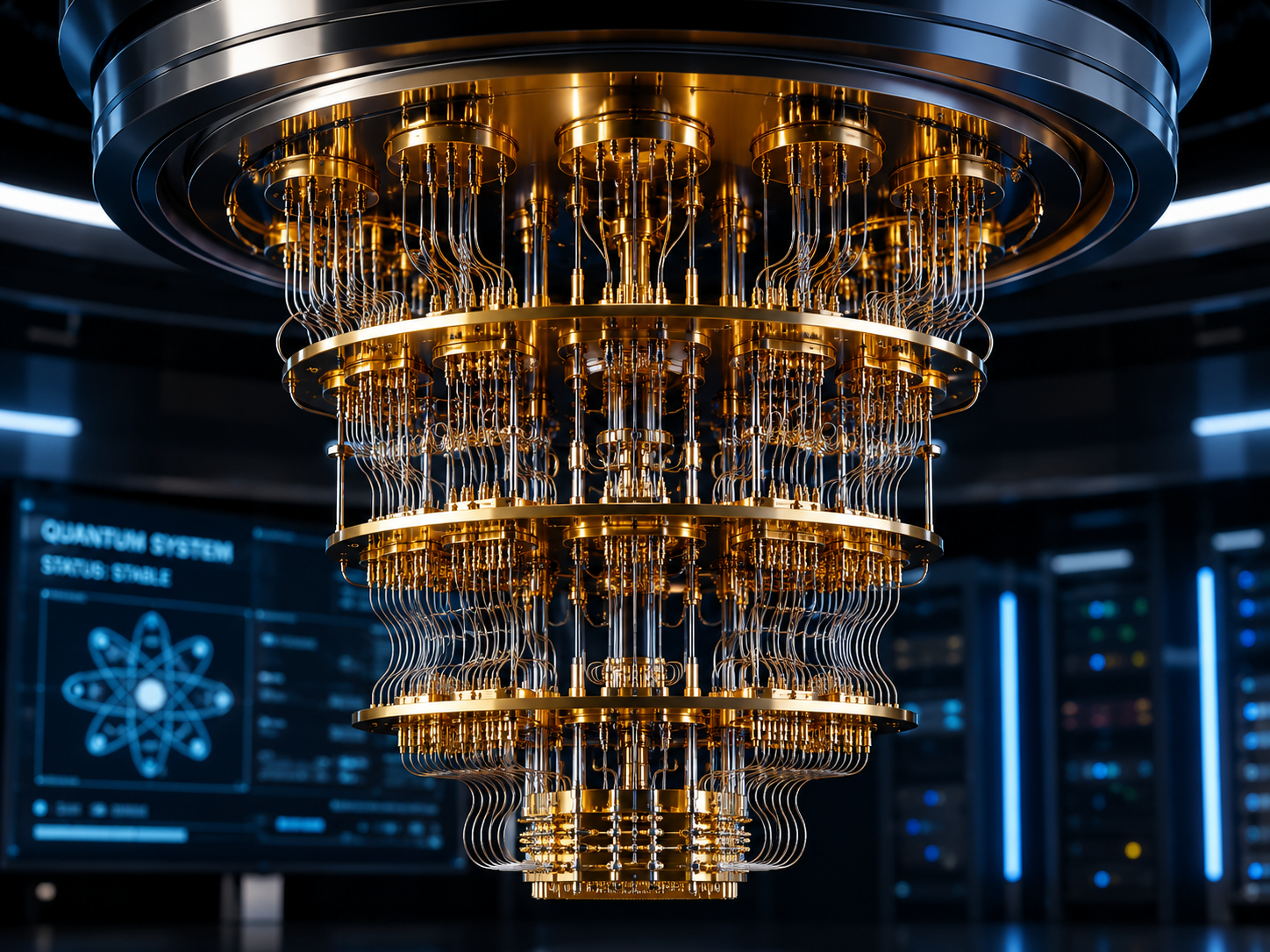
Many people ask, What is Quantum Computing, as this technology continues to gain attention worldwide. Among all developing technologies, quantum computing is the most sophisticated. Classical computing has already revolutionised society; however, quantum computing will provide the tools to solve problems classical computing can never answer. Quantum computing will transform industries such as medical research, cybersecurity, and even AI. Although quantum computing seems to be esoteric, its basic principles can be easily understood. As a combination of computer science and quantum physics, quantum computing enables advanced information processing at unprecedented speeds.
What Is Quantum Computing?
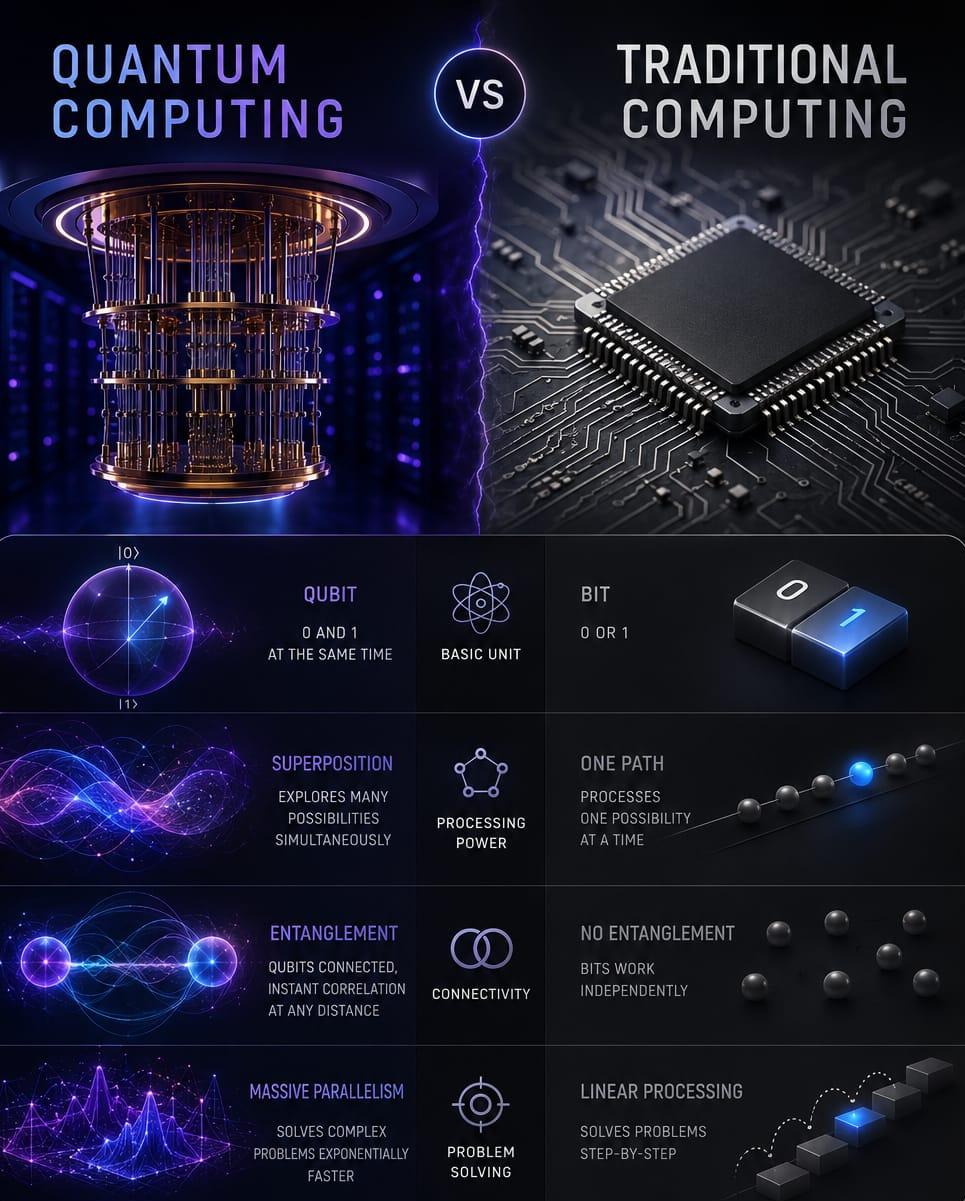
Understanding Quantum Computing can help students learn about the future of computing. The branch of computing called quantum computing will use quantum mechanics to solve problems. Classical computing uses binary systems, while quantum computing relies on “qubits.” Qubits are unique because they can exist in a combination of both 0 and 1 states simultaneously. Quantum computing harnesses the ability of qubits to process multiple values to run multiple calculations all at the same time. Quantum computers are extremely fast compared to classical computers because traditional computing can only solve a problem step by step and one at a time. By evaluating many possibilities simultaneously, quantum computers can solve certain types of problems significantly faster than classical computers.
How Does Quantum Computing Work?
One common question in technology is, What is quantum computing and how does it work?
Understanding quantum computing requires grasping distinctions between classical and quantum bits. Classical computing relies on bits, which are binary values that can only represent either a 0 or a 1. Quantum computing relies on the physics of quantum mechanics and qubits. Two foundational features of quantum computing are:
Superposition: This feature allows a qubit to be 0 and 1 at the same time.
Entanglement: This phenomenon links qubits so that their states become correlated, regardless of the distance between them.
Superposition and entanglement allow quantum computing to solve the kinds of problems that classical computing can't or does so extremely inefficiently.
Why Is Quantum Computing Important?
Here are some reasons why quantum computing is important:
It may solve currently unsolvable problems
The development of new drugs is possible
Science will be accelerated
AI may be strengthened
Transportation may be improved
Cybersecurity may benefit
While still in its infancy, the future of the technology is very bright.
What Is Quantum Computing Used For?
Quantum computing is particularly useful for computationally intensive problems, and a lot of complicated problems fall into this category. Although it is in its infancy, companies and researchers are attempting to derive some usefulness from it.
Healthcare and Medicine.
Artificial Intelligence
Financial Services
Cybersecurity
Weather Forecasting
Supply Chain and Logistics
Who Invented Quantum Computing?
Learning who invented quantum computing provides insight into the pioneers of advanced computing. The concept of quantum computing originated from ideas proposed by Richard Feynman in the 1980s. He theorized computers that we are currently using are incapable of efficiently simulating quantum systems. Richard Feynman introduced the concept, while David Deutsch later developed theoretical foundations and proposed some of the earliest quantum algorithms. Currently, many of the large tech companies in the world, like IBM, Microsoft, and Google, have a vested interest in developing quantum systems.
Quantum Computing vs. Traditional Computing
The comparison of Quantum Computing vs Traditional Computing helps explain the future of technology. Traditional computers are designed to perform tasks such as browsing the web, watching videos, uploading and downloading documents, and playing games. Traditional computers are fast, reliable, and inexpensive. Quantum computers, on the other hand, are designed to tackle complex and advanced scientific and mathematical problems. They are not designed to completely take over the functions of normal/ traditional computers. Rather, they are designed to best complement traditional computers. Some calculations could take classical computers several years to complete. However, those calculations may be completed by quantum computers in a matter of minutes.
What Is the Difference Between AI and Quantum Computing?
Artificial Intelligence and quantum computing are two completely different concepts and technologies. Artificial Intelligence is a technology focused on enabling machines to learn, reason, and make decisions based on the information provided. Examples of Artificial Intelligence include chatbots, recommendation systems, and voice assistants. On the other hand, quantum computing is an entirely new approach to the way information and data are processed and/or computed, this time relying on the realm of quantum physics. In other and simpler words, developing Artificial Intelligence is about making machines smarter, while quantum computing is about faster and more powerful computations. Though both may be considered independent technologies, the combination of both technologies may significantly enhance artificial intelligence systems.
Challenges of Quantum Computing
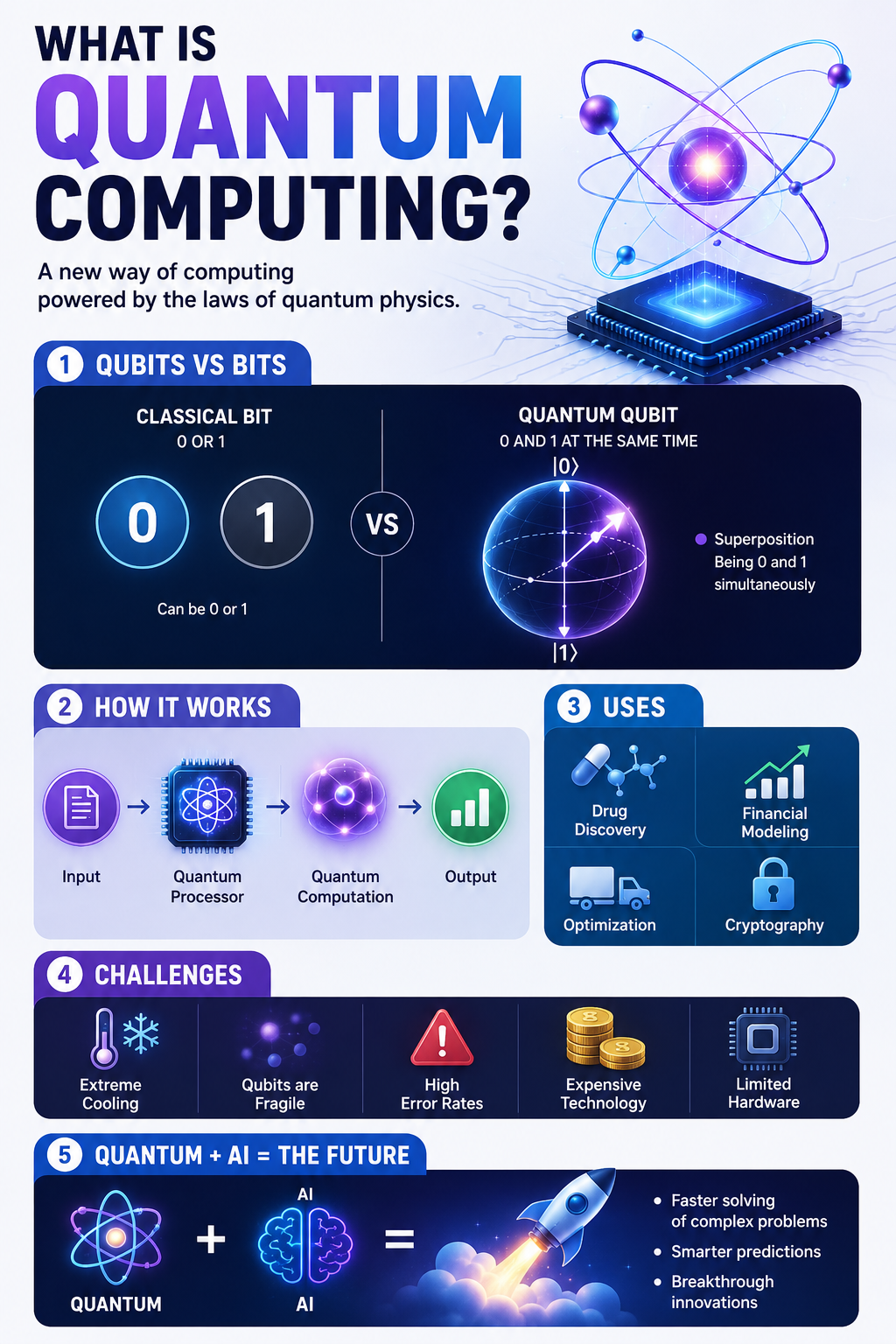
Quantum computing involves a new realm of technology, and as with any new technology, quantum computing will face several threats and problems. The systems and structures of quantum technology are extremely fragile and highly sensitive. In order to keep quantum systems stable, the construction of such systems may be done at very low temperatures. Such systems may be difficult to construct and expensive. Some of the primary obstacles include:
The cost of development is too high
Hardware requirements are too intensive
Tough issues surrounding error correction
Few devices exist that incorporate the technology
Currently, the technology is primarily used by researchers and specialists with advanced training.
Due to these challenges, quantum computing is still an emerging technology and is unlikely to be commercially available for early adopters in the foreseeable future.
The Future of Quantum Computing
Learning “What is Quantum Computing” can provide insight into next-generation technological innovations. With continued advancements, experts think that quantum systems have the potential to solve world problems faster than anything we have today. Because of this, significant investments are being made in quantum research by various universities, government entities, and tech companies. Rapid improvements are being made, despite the fact that we are still years from widespread utilisation. Quantum systems of the future are likely to have an impact on multiple sectors of the economy, including, but not limited to, healthcare, education, finance, transportation, and cybersecurity.
Conclusion
As technology evolves, more people are becoming interested in “what is quantum computing” and its potential impact on the future. Quantum Physics provides a fundamentally different way to process information. It uses a new basic unit of information called a qubit to solve elegant and complex problems that are intractable by classical systems.
Despite how early we are in development, the future of quantum systems will likely reshape the way we think about science, medicine, artificial intelligence, and cybersecurity. If you are interested in learning more about the new generation technologies and future-focused skills, visit SkillSnap Learning.