Galaxies in the Universe: Types, Names, and Amazing Facts
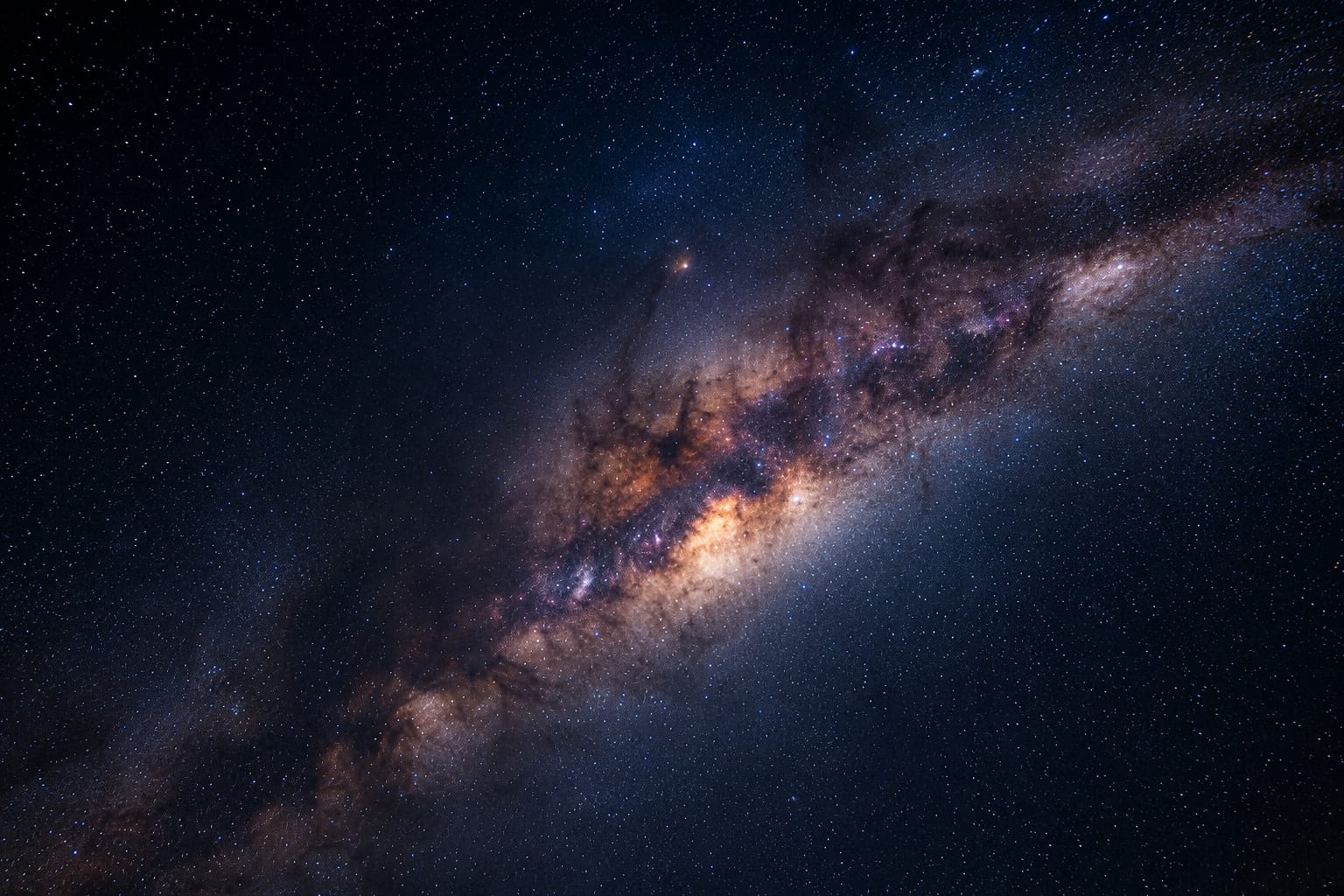
Galaxies in the universe contain billions of stars, planets, and other celestial objects. Galaxies, which contain stars, planets, gas, and dust, make up the observable universe and contribute to its vast beauty. The Milky Way is a spiral galaxy and an example of the galaxies that are spread throughout the universe. Each galaxy has a unique story. Scientists believe galaxies began forming a few hundred million years after the Big Bang. In these billions of years, the universe's dust and gases coalesced, and then gravity formed these structures into stars and into galaxies. The construction of modern telescopes has enabled the scientific community to unravel the formation of the universe and consequently understand its structure and evolution.
All Galaxies in the Universe
There are countless galaxies in the universe, each with its own unique structure and features. It had long been believed that there were around 100 billion galaxies in the observable universe. Modern research suggests there may be up to 2 trillion galaxies in the observable universe, although the exact number remains uncertain. The majority of these galaxies are small and faint and thus are difficult to detect with our best telescopes. The universe is always expanding, so galaxies grow increasingly distant from one another. Some galaxies are isolated systems, and others contain thousands of galaxies bound to each other through gravity. Although new galaxies continue to be discovered, our ability to observe them is limited by the size of the observable universe, as there are portions of the universe which are beyond our reach.
What is a Galaxy?
A galaxy is a massive collection of dust, gas, and dark matter bound by gravity. Galaxies can contain anywhere from millions to trillions of stars. Our Solar System is located within the Milky Way Galaxy. The size of galaxies is different. Small or dwarf galaxies can have a few billion stars, while larger galaxies can have over 100 trillion stars. Most large galaxies are believed to contain a supermassive black hole at their centres.
Types of Galaxies
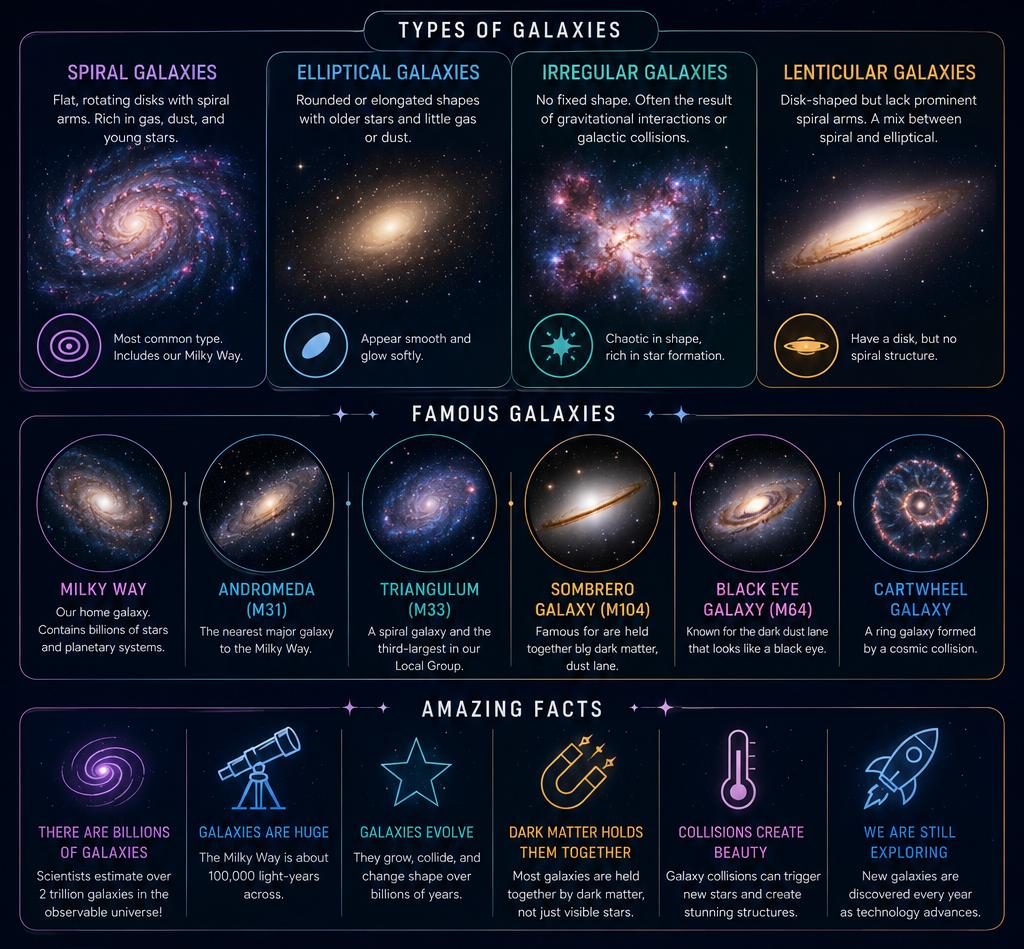
There are various types of galaxies in the universe. Based on shape, structure, and other factors, scientists have classified galaxies into four groups.
Spiral Galaxies
Spiral Galaxies are popular and easily recognisable. They have a bright central bulge and spiral arms rich in gas and dust. An example of a spiral galaxy is the Milky Way. One characteristic of spiral galaxies is that many stars are formed there. The arms of the spiral hold much dust and gas. For this reason, they contain large numbers of stars and active star-forming regions.
Elliptical Galaxies
Elliptical galaxies are round or oval shaped. New star formation in this galaxy is slow. This can be attributed to older stars and a lack of dust and gas. Some of the largest galaxies belong to this category and can be formed due to the collision of multiple galaxies in the universe.
Irregular Galaxies
Irregular galaxies are galaxies without a defined shape. Irregular galaxies are often rich in gas and dust, allowing new stars to form rapidly.
Lenticular Galaxies
Lenticular galaxies are a hybrid of spiral and elliptical galaxies. They have a bulge in the centre and a disk, but lack spiral arms. Some scientists think that of the few spiral galaxies in the universe, some can transition to lenticular galaxies in a few billion years.
Famous Galaxies in the Universe and Their Names
Many galaxies exist in the universe, but a few of them are considered famous for their size, beauty, or significance.
Galaxy Name | Description |
Milky Way | The galaxy containing our solar system. |
Andromeda Galaxy | The nearest major galaxy to the Milky Way is expected to merge with it in the distant future. |
Triangulum Galaxy | A smaller spiral galaxy located near the Milky Way and Andromeda. |
Whirlpool Galaxy | Famous for its well-defined spiral arms. |
Sombrero Galaxy | Known for its bright central bulge and hat-like appearance. |
Messier 87 | Home to the first black hole ever directly imaged by astronomers. |
The Milky Way Galaxy
The Milky Way Galaxy is the galaxy that contains our Solar System. It contains an estimated 100–400 billion stars and is 100,000 light-years across. Our solar system is located in the Orion Arm. Sagittarius A* is believed to be the black hole that sits at the centre of the galaxy. Even with its size, it is only one of the millions of galaxies that exist in the universe.
Galaxy Collisions and Cosmic Evolution
The variety of galaxies in the universe shows the incredible diversity of cosmic formations. Galaxies continuously move through space. About once a billion years, gravity will pull them together; these incredible collisions will alter them for millions or billions of years. When galaxies collide, it is rare for stars to crash into one another. This is due to the immeasurable space between them. Gas clouds may collide and trigger the formation of new stars. Scientists think the Milky Way and Andromeda galaxies will collide in about 4 to 5 billion years.
Dark Matter and Galaxies
The relationship between Dark Matter and Galaxies is one of the most important topics in modern astronomy. Galaxies contain mass beyond what scientists can see. This mass is called dark matter. Although invisible, dark matter exerts gravitational effects that influence the motion of stars and galaxies. Without dark matter, many galaxies would not have enough gravitational force to maintain their observed structures. Scientists continue to study dark matter to better understand the universe.
The Future of Galaxies
The universe will continue to grow, and galaxies will drift further and further apart. Some galaxies will merge together; others will slowly lose gas, the catalyst for star creation. Eventually, many galaxies will become quieter as star creation decreases. The universe may feel infinite, but galaxies, over cosmic time, are always changing and evolving.
Conclusion
The study of galaxies in the universe continues to reveal fascinating secrets about the vastness of space. Galaxies are vast systems of stars, gas, dust, dark matter, and black holes that continue to reveal fascinating mysteries. Spiral galaxies, like the Milky Way, and massive elliptical galaxies document the history of cosmic evolution. Researching galaxies can provide insight regarding the origins of life, dark matter, and gravity.
If you are fascinated by the cosmos, you might like the blogs from SkillSnap Learning. Here you can find everything related to your interests, from general topics to tech and many more.