Financial Literacy: Importance, Benefits and Tips for 2026

Financial literacy is the ability to manage personal finances, including budgeting, saving, investing, managing debt, and seeking financial advice. It helps achieve financial stability and supports long-term decision-making, keeping us away from financial crises. Financial literacy teaches how to avoid financial pitfalls and build better financial plans. Financial literacy helps build a strong financial future and provides long-term security.
What is Financial Literacy?
Basic financial principles help people create short-term budgets and plan long-term savings. Financial literacy promotes responsible spending and low-debt habits. It supports steady financial and budget growth. It also helps set long-term financial goals and achieve them through effective planning. It also supports financial planning and risk management. Through these principles of financial literacy, people are empowered to make the right decisions with their finances, thereby financially safeguarding their future.
Benefits of Financial Literacy
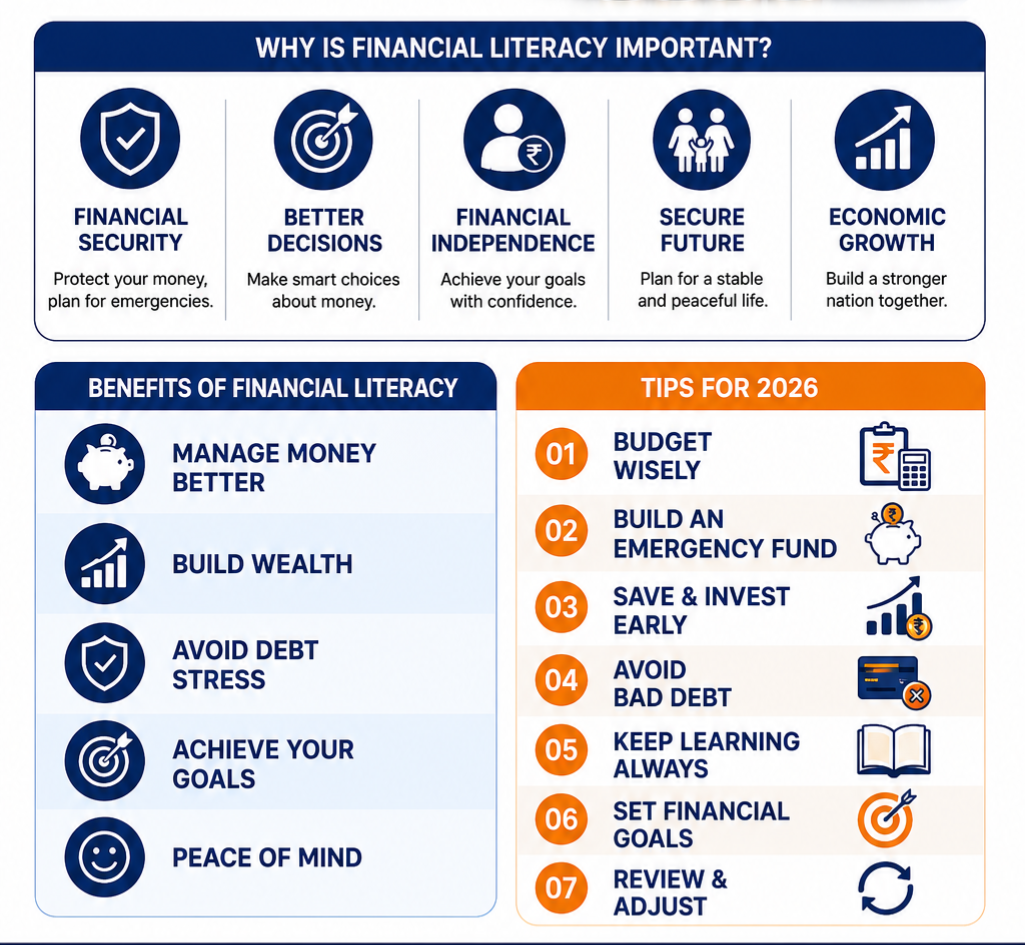
Financial literacy offers numerous benefits; for example, it helps individuals budget effectively and achieve financial security. Financial literacy helps individuals learn and implement effective budgeting strategies. With financial literacy, one can make informed financial decisions to avoid unnecessary debt and save for financial emergencies. It helps plan savings and investment strategies to achieve goals such as retirement, home ownership, and a child’s education. It also protects against financial scams and reduces financial stress. Financial literacy will become increasingly important as people increase their use of online financial services. The increasing use of online banking makes financial literacy even more important.
Ways to Improve Financial Literacy
Financial literacy is essential for achieving a secure financial future and making sound decisions. The best way to develop financial literacy is to understand the significance and the advantages of budgeting, saving, investing, and managing debt. It can be developed by reading reliable financial publications and personal finance books. A good strategy includes creating and maintaining a budget while tracking and controlling expenses. Financial literacy can also be improved through the use of budgeting apps, financial workshops, and staying informed about economic and market trends. With the guidance of a financial expert and the continued practice of responsible spending, financial literacy will be strengthened. Financial knowledge, coupled with the unwavering dedication to its practice, can lead to a financially secure and successful future.
Conclusion
Financial literacy refers to understanding and using various financial skills. Strong financial skills assist individuals in budgeting and planning, as well as helping them avoid problems like insurmountable debt. The need for strong Financial Literacy skills has never been higher than today. The digital economy is more accessible and decentralised. Better financial habits have a compounding effect on your future and your family’s well-being. Strong Financial Literacy skills help avoid lost opportunities.
You can learn difficult topics with ease and efficacy, such as Financial Literacy with SkillSnap Learning. Experts will teach you all you need to know to build a secure financial future skillfully and effortlessly. You can even join our batches for easy and fun learning.