What Is Manipravalam: A Complete Guide for Class 7 Students 2026
What Is Manipravalam: A Complete Guide for Class 7 Students 2026
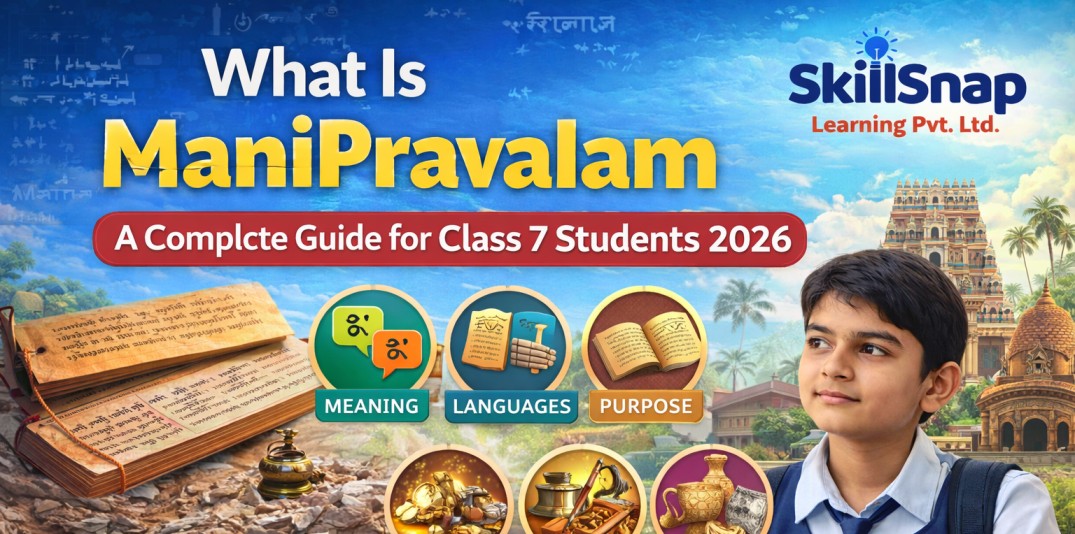
History is not just about dates and wars; it is also about how people spoke, wrote, and created art. One of the most beautiful examples of cultural blending in medieval India is the development of the Manipravalam language style. In this blog, we will break down exactly what is Manipravalam (Class 7 students), its history, and why Manipravalam matters for your Class 7 exams.
What Is Manipravalam?
The word Manipravalam is made up of two words, Mani, meaning rubies or other precious stones, and Pravalam, meaning corals. These two precious stones represent two different languages coming together: Sanskrit and early Malayalam. Just as a jeweller strings rubies and corals together to make a beautiful necklace, medieval writers blended Sanskrit and Malayalam to create the unique literary style known as Manipravalam.
The Most Famous Example: Lilatilakam
Lilatilakam was written in the 14th century. It is a famous text dealing with grammar and poetics (the art of writing poetry). The Lilatilakam was written in the Manipravalam style, perfectly showcasing how Sanskrit and the regional language were mixed to create beautiful literature.
The Historical Context: The Cheras of Mahodayapuram
To understand Manipravalam, we have to travel back in time to the 9th century in the southwestern part of the Indian peninsula (modern-day Kerala). Here, the Chera kingdom of Mahodayapuram was established. The Chera rulers were instrumental in developing the regional culture. They introduced the Malayalam language and script in their official records and temple inscriptions. This is one of the earliest examples of a regional language being used in official records in the subcontinent!
However, the Cheras also deeply respected Sanskrit traditions. The temples of Kerala borrowed heavily from the Sanskrit epics for their theatre and storytelling. Because the people were using both local Malayalam and classical Sanskrit, a bridge between the two was born: Manipravalam.
Why is Manipravalam Important for Class 7 History?
Understanding Manipravalam helps students grasp a core concept of Indian history. It teaches us that regional cultures do not grow in a bubble. They are constantly influenced by other traditions. The Malayalam we know today grew richer because it embraced Sanskrit vocabulary and literary forms, while still keeping its unique regional identity. It is a perfect example of how diversity and blending create something new and enduring.
Quick Revision Notes
By understanding what is Manipravalam, Class 7 students can see how their ancestors communicated, shared ideas, and built the rich linguistic tapestry of India. If you are building a lesson plan, here are the key takeaways to emphasise:
Definition: A literary style that blends Sanskrit and the regional language (Malayalam).
Meaning: Diamonds and Corals.
Key Kingdom: The Cheras of Mahodayapuram (9th century, present-day Kerala).
Key Literature: Lilatilakam (a 14th-century text on grammar and poetics).
Core Concept: Demonstrates the synthesis of classical (Sanskrit) and regional traditions.