What Changes Took Place in Varna-Based Society? Class 7 Explained
What Changes Took Place in Varna-Based Society? Class 7 Explained
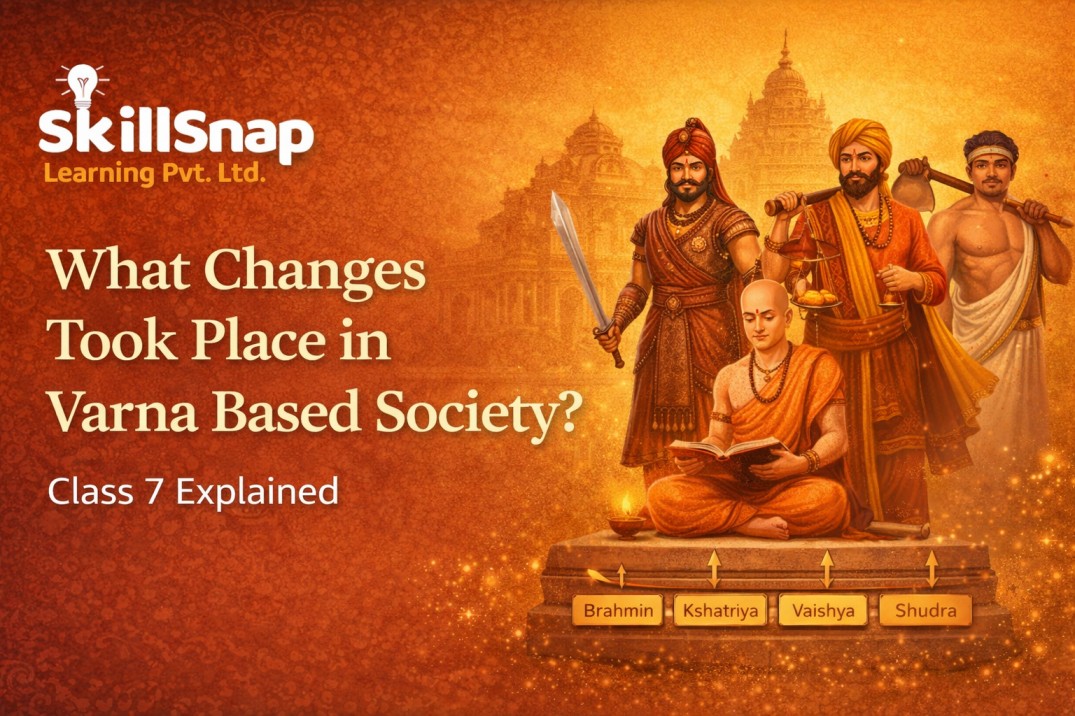
To understand what changes took place in Varna-based society, you must first understand how society changed during the medieval period. The Varna-based society, also known as the caste system in India, has undergone significant changes over time.
What Changes Took Place in Varna-Based Society (Short Answer)
As society became more complex, the fourfold Varna system changed in the following ways:
Jati formation: Some small groups known as jatis emerged based on specific occupations, such as blacksmiths and carpenters.
Integration of Tribes: Numerous tribes were integrated within the caste structure, with their chiefs taking positions in the caste of Kshatriyas.
Rajputs’ Position: New clans of Rajputs attained prominence and took the place of the earlier ruling families.
Influence of Economics: The position in society ceased to depend solely on one’s birth but also began to depend on the power and influence wielded by individuals in their native communities.
What Changes Took Place in Varna-Based Society (Long Answer)
During the medieval period, the traditional Varna system transformed due to the growth of the economy and the need for new social structures.
Along with the growth of commerce and agriculture, there was an emergence of specific castes such as blacksmiths, stonemasons, and carpenters. They were called jatis.
Jatis became the basic units of social organisation rather than the four Varnas. Every jati was governed by regulations, which were controlled by the council of elders.
Several tribes were assimilated into the Brahmanical social system. The ordinary tribesmen became members of the lower jatis, whereas the chiefs of the tribes received Kshatriya status.
The period between the 8th and 12th centuries saw the rise of many Rajput dynasties, such as the Chahamanas and Chandelas, among others. Some of these dynasties originated from tribal stock but earned great prominence for themselves by founding their own kingdoms.
However, in some regions like the North-West (including Punjab and Sindh), the concept of Varna never caught on. Many individuals converted to Islam in these regions due to its more equal social structure.
Likewise, the practitioners of the Bhakti and Sufi movements began rejecting the notion of superiority based on birth.