Why Onions Make Us Cry? The Science Behind Unexpected Tears
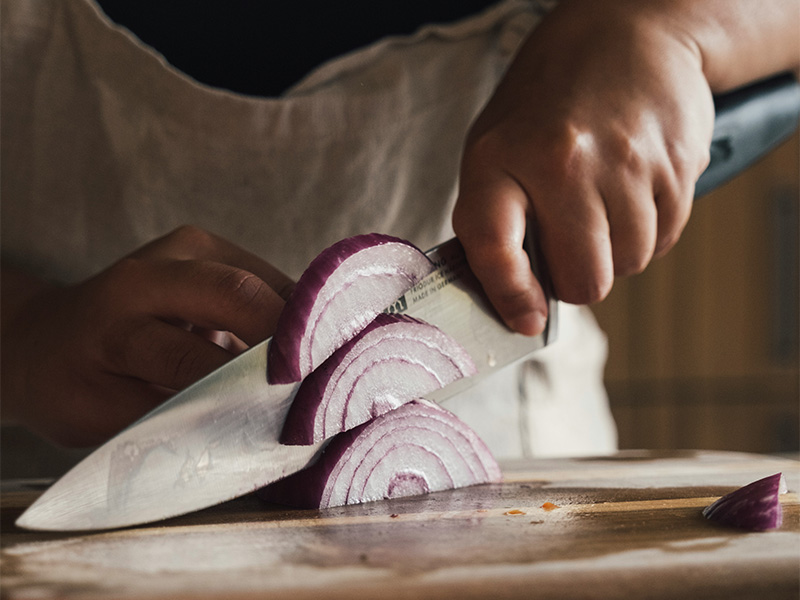
Have you ever sliced into an onion only to look as though you've been watching a tear-jerking movie? Well, here's your answer to the question "Why Onions Make Us Cry?" Sharp onions, like white & yellow onions, release much more tear gas due to the high amounts of sulfur compounds. Go through the blog to learn: Why Onion Makes Us Cry?
Why Do Onions Make Us Cry?
Do you know why we cry when we cut onions? Because they have an intelligent defence system, there is no harm in that. When the onion is sliced, an amino acid sulfoxide rich in sulfur and alliinase enzymes are released.
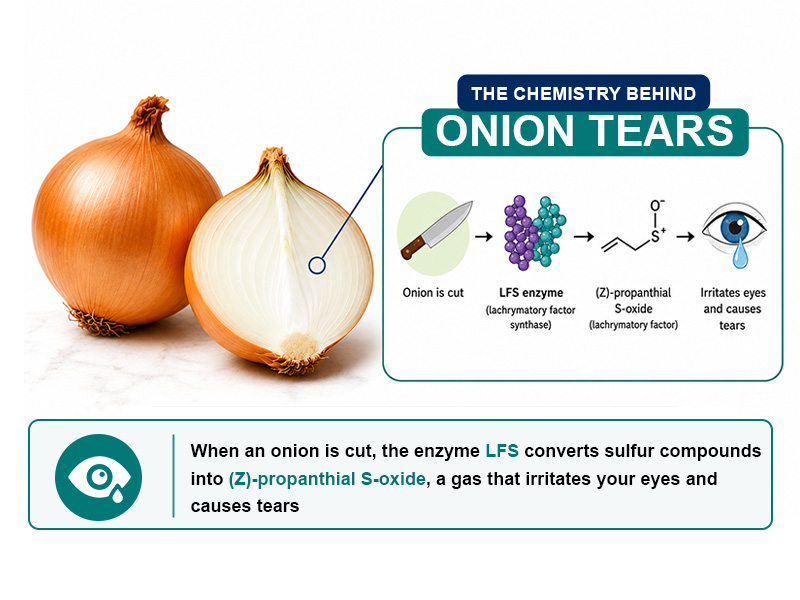
These two react to form syn-propanethial-S-oxide, a gas. This gas then moves up, meets the fluid in your eye, and produces a little sulfuric acid that irritates your cornea. Your body automatically sheds tears to wash away the gas. In simple words, syn-propanethial-S-oxide is the acid in onion which makes us cry.
How To Cut Onions Without Crying?
Are you tired of the waterworks? Try these scientifically proven tricks to cut onions without crying:
Freeze them: Put the onion in the fridge for half an hour. The cold will hinder this gas-producing process.
Sharp Knife: Use a very sharp knife while cutting onions. Sharp knives produce smooth cuts, while blunt knives crush the cells and release more gases.
Candle trick: Light a candle near the onion. This will burn up some gases, but this isn't a miracle cure.
Running Water or Fan: Use a fan to remove gases from the onion, or chop it under running water to cut onions without crying.
Goggles: Swimming goggles help keep away the chilly gases, and you can easily cut onions without crying.
When you're next chopping onions, you'll be grinning instead of weeping. Nature sure is sly, isn't it?
Conclusion
Hope you understood why onions make us cry. Remember that Syn-Propanethial-S-Oxide, not grief, is what's causing those tears to spring up. Syn-Propanethial-S-Oxide is the reason why tears come while cutting onions. SkillSnap Learning provides interesting facts and the science behind your daily life in the form of blogs and articles. You can also check our online courses for classes 6 to 10 for all subjects.