Why Do We Get Goosebumps? Definition, Causes, and Solutions

All of us have had our experience of Goosebumps in our lives; then comes the question of why we get goosebumps. At times, we experience goosebumps due to the cold. At other times, we encounter them suddenly when we listen to songs, watch a horror movie, or even engage in meaningful conversations.
The explanation of this phenomenon is associated with the body's response system. The reason for experiencing goosebumps lies in the sudden contraction of the muscles below the skin. It is an involuntary response governed by the nervous system.
In this blog, we will understand why goosebumps happen, what triggers them, why music causes them, why fear causes them, and why they sometimes appear for no clear reason at all.
What Are Goosebumps?
Before understanding “Why do We Get Goosebumps?”, let us first understand what they actually are. Goosebumps are tiny raised bumps that appear on the skin when small muscles around hair follicles tighten. Every hair on your body is connected to a tiny muscle. When these muscles contract suddenly, the hairs stand up slightly, creating those small bumps on the skin.
This process happens automatically. You do not control it consciously. The scientific name for goosebumps is “piloerection,” but honestly, most people simply know them as goosebumps. The name comes from the way human skin resembles plucked goose skin when the bumps appear.
Why We Get Goosebumps
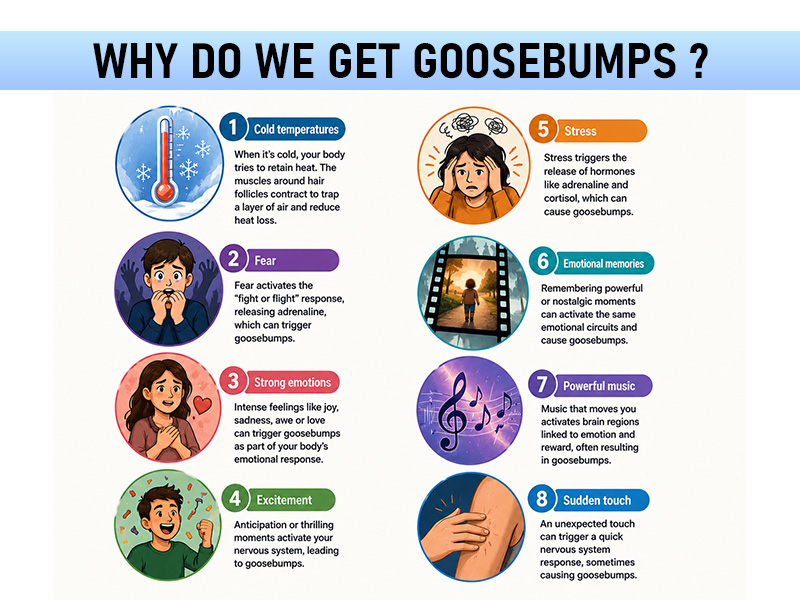
Goosebumps are part of the body’s automatic response system. The nervous system reacts quickly to certain triggers and sends signals to tiny muscles under the skin. This usually happens because of:
Cold temperatures
Fear
Strong emotions
Excitement
Stress
Emotional memories
Powerful music
Sudden touch
This is simply your body responding before you even have time to react. An example of this can be seen when you are walking at night by yourself, and you hear someone walking behind you. By the time that your brain realises what is happening, you may have already started to get goosebumps.
Why Do We Get Goosebumps When Cold?
This is probably the most common reason people experience goosebumps. The answer goes back to human evolution. Long ago, humans had much more body hair than we do today. When people got cold, goosebumps caused body hair to stand up. This trapped a layer of air near the skin, helping keep the body warm. Animals still use this system very effectively today. Think about cats or dogs puffing up their fur during cold weather or fear.
Humans still have the same reaction, even though we no longer have thick body hair. So when you feel cold, the nervous system triggers goosebumps automatically as part of the body’s attempt to stay warm. Even though goosebumps do not help modern humans much anymore, the reaction still exists.
Why Do We Get Goosebumps When Scared?
Fear is another strong trigger. When fear appears, the body enters what is called the “fight or flight” response. This is the body’s emergency reaction system. Your brain quickly releases stress hormones like Adrenaline. The heart beats faster, muscles tighten, breathing changes, and goosebumps may appear. This reaction helped early humans survive dangerous situations.
Let’s just say thousands of years ago, someone suddenly faced a wild animal. The body needed to react instantly for survival. Goosebumps became part of that larger reaction system. Even today, scary situations can still trigger the same response. For example:
Watching a horror movie.
Hearing sudden sounds at night.
Walking alone in the darkness.
Reading something creepy.
Feeling sudden danger.
The body reacts automatically before logical thinking fully kicks in.
Why Do We Get Goosebumps When Listening to Music?
This one is surprising for many, as music seems to be neither dangerous nor cold. But why do we experience goosebumps while listening to music? This is because music affects our emotions. It is capable of inducing memories, excitement, sadness, inspiration, or emotional connections through certain songs. When emotions become intense, our brain reacts in physical ways, too.
One such reaction could be the secretion of chemicals like dopamine that have an association with pleasure or intense emotions. We all know moments like this. Maybe a song reminds you of someone important. Maybe the singer’s voice suddenly becomes powerful. Maybe the music slowly builds up before a dramatic moment.
And suddenly, goosebumps appear on your arms. As we can see, goosebumps are not only connected to fear or cold. Emotions can trigger them too.
Why Do We Get Goosebumps When Touched?
Touch can also create goosebumps. Why do we get goosebumps when touched? The skin is full of nerve endings. Certain types of touch create strong reactions in the nervous system. For example:
A gentle touch from someone you care about
Unexpected physical contact
Emotional hugs
Romantic moments
Tickling
Sensitive skin reactions
Nervous responses are fast; therefore, goosebumps can result. It is also true that even being emotionally comfortable can cause goosebumps. There is yet another thing I would like to tell you about: we humans are emotional beings. Touching has a strong link with our emotions, memories, safety, and bonding.
Why Do We Get Goosebumps for No Reason?
People wonder: Why do we get goosebumps for no reason? Sometimes goosebumps seem completely random. You may suddenly notice them while sitting quietly or doing something ordinary. In many cases, there actually is a reason, but the trigger happens so quickly that we barely notice it. Possible hidden triggers include:
Emotional thoughts
Stress
Anxiety
Small temperature changes
Memories
Music in the background
Sudden feelings
Tiny nerve reactions
The nervous system constantly reacts to both physical and emotional signals. So even if goosebumps feel random, the body is usually responding to something internally.
What Causes the Feeling of Goosebumps?
Many people ask, "Why do we get goosebumps?" The feeling comes from muscles tightening around hair follicles under the skin. When the nervous system activates those muscles, tiny bumps form and hairs lift slightly. The body and brain work together during this reaction. At the same time, people may also feel the following:
Tingling
Chills
Sudden excitement
Shivers
Emotional waves
Why Emotional Moments Trigger Goosebumps
One interesting thing about humans is how strongly emotions affect the body. Why? The reason is that the brain processes emotions before logically processing them. The nervous system gets activated, and goosebumps are formed. This is the reason why some people have goosebumps during emotional scenes or songs. Goosebumps usually occur during:
Inspirational speeches.
Emotional movies.
Deep conversations.
Romantic moments.
Religious experiences.
Powerful memories.
National anthems.
Emotional endings in stories.
Why Some People Get Goosebumps More Often
Not everyone experiences goosebumps equally. Some people get them constantly, while others rarely notice them. People who are highly emotional or deeply connected to music often report stronger goosebump reactions. This depends on:
Emotional sensitivity.
Nervous system reactions.
Personality.
Environment.
Stress levels.
Music connection.
Skin sensitivity.
Goosebumps During Excitement
Goosebumps are not always negative. Excitement can trigger them too. The body reacts strongly during excitement, and goosebumps may appear. For example:
Watching your favourite team win.
Hearing exciting news.
Going on stage.
Riding a roller coaster.
Meeting someone important.
Experiencing surprise moments.
Why Horror Movies Cause Goosebumps
Why do we get goosebumps after scary movies? A sudden sound plays. The atmosphere becomes silent. Some scary thing appears. Then there are goosebumps all over your body. This is because the brain treats the stimulus like a real threat, although you know in your mind that it is just a film.
Why Sad Moments Can Cause Goosebumps
Why do we get goosebumps when we are sad? Interestingly, sadness can also trigger goosebumps. Emotional pain affects the brain deeply. For example:
Emotional songs
Breakup memories
Funeral speeches
Emotional scenes in movies
Missing someone
The body sometimes responds physically to emotional overload. As we can see, goosebumps are connected to emotions much more than people realise.
Animals Get Goosebumps Too
Animals also get goosebumps. Humans are not the only creatures with this reaction. Many animals experience similar reactions. Cats, dogs, birds, and other animals puff up their hair or feathers. This helps them appear larger or stay warmer. Humans simply kept part of this old system even after evolving differently. This happened because of:
Fear
Cold
Threats
Stress
Can Anxiety Cause Goosebumps?
Yes, anxiety can trigger goosebumps. Anxiety makes one’s nervous system more sensitive. Anxiety can even cause goosebumps without the temperature being cold. The level of stress hormones rises, and one’s body can respond to the stress physically, including:
Sweating.
Fast heartbeat.
Shaking.
Chills.
Why Do Some Songs Give Strong Goosebumps?
Why do we get goosebumps after hearing a song? Certain songs affect people more deeply than others. Scientists believe music can activate emotional reward systems inside the brain. That emotional intensity sometimes triggers goosebumps naturally. We all probably have at least one song that gives us chills every single time. This can happen because of:
Personal memories.
Emotional lyrics.
Powerful voices.
Sudden musical changes.
Emotional connection.
Goosebumps and Human Emotions
One fascinating thing about goosebumps is how closely they connect physical reactions with emotions. The body reacts not only to physical danger but also to emotional meaning. The nervous system treats emotional intensity almost like a physical event. That is why emotional experiences can create physical sensations. For example:
Pride
Love
Fear
Inspiration
Nostalgia
Joy
Sadness
Can Goosebumps Be a Good Sign?
Why do we get goosebumps? Goosebumps are generally normal body reactions. They simply show that the nervous system is responding to something. In most cases, they are harmless. However, if goosebumps happen constantly with other symptoms like pain, fever, numbness, or illness, medical advice may help.

Why Do Humans Still Have Goosebumps Today?
Why do we get goosebumps? Even though humans no longer need thick body hair for warmth or defence, goosebumps stay because evolution does not remove every old system as soon as possible. The body still carries many survival reactions from ancient times. Goosebumps are basically small reminders of human evolution.
The body reacts automatically without asking permission. That is what makes Goosebumps so interesting. We all know certain moments when goosebumps suddenly appear:
Hearing a powerful song in headphones.
Watching emotional sports moments.
Listening to scary stories at night.
Feeling cold air unexpectedly.
Hugging someone after a long time.
Watching emotional movie endings.
The Brain and Goosebumps Connection
Why do we get goosebumps? The brain plays the biggest role in goosebumps. The nervous system constantly scans for danger, emotion, excitement, and physical changes. Once the brain detects something strong enough, it sends signals throughout the body. This creates:
Muscle tightening
Hair lifting
Tingling feelings
Goosebumps
It all happens within seconds.
Are Goosebumps Different From Chills?
Why do we get goosebumps? People often confuse chills and goosebumps. They are connected but not the same. Goosebumps are visible skin bumps. Chills are the cold or tingling sensation people feel. Many times, both happen together.
Conclusion
So, why do we get goosebumps? Goosebumps occur when the body responds to stimuli such as cold weather, fear, emotions, excitement, music, touch, stress, and others. The muscles located beneath the skin contract, leading to a slight raising of hair and the formation of goosebumps.
Despite their seeming insignificance, goosebumps have a lot to do with human survival and evolution, dating back thousands of years. As we can observe, humans are not only responsive to physical threats, but they also respond to their emotions. It is quite surprising that an emotion-evoking movie, song, or cold breeze can evoke an ancient physiological response in people.
The next time goosebumps suddenly appear, you will know your nervous system is quietly doing its job in the background. Want to learn more about this type of content and topics? Follow SkillSnap Learning for fun facts and smart learning content made simple for everyone.