How Does GPS Work? Everything You Need to Know
Have you ever asked yourself, "How does GPS work? " Well, it is quite obvious that we use GPS in our daily lives. Whenever we are booking a cab, navigating via Google Maps, searching for a nearby store, or even sharing our live location, GPS helps us reach our destination. In this blog, you will learn everything you need to know about the Global Positioning System.
What Is GPS?
GPS stands for Global Positioning System. It is a system that helps devices find locations on Earth. It helps people travel easily and reach the correct place. GPS is used in:
Smartphones.
Cars.
Aircraft.
Smartwatches.
Delivery apps.
How Does GPS Work?
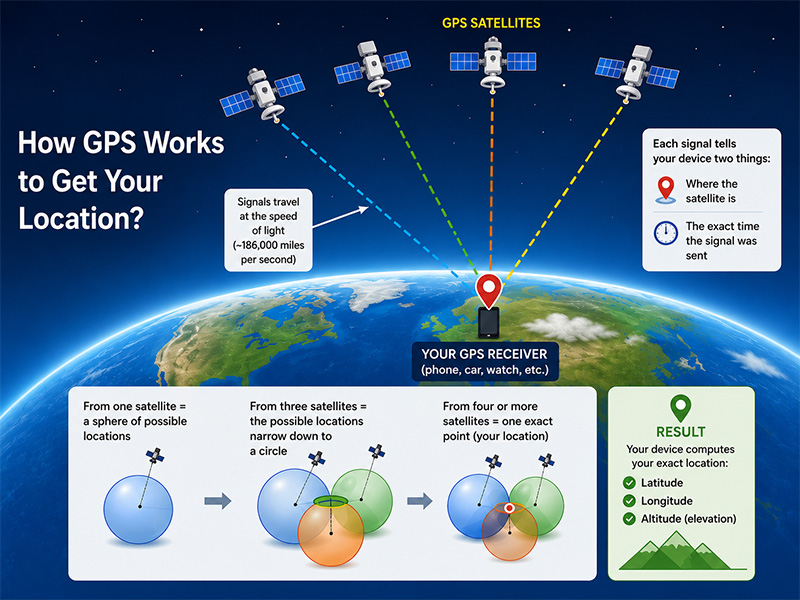
Do you know “How does GPS work with the help of satellites?” Many GPS satellites are orbiting the Earth all the time. These satellites keep sending signals towards Earth. Your phone and device receive those signals and know where you are.
You can think of it like this: imagine three friends are standing in different places and telling you how far you are from them. By comparing all the distances, your exact position can be found. GPS works similarly.
How does GPS work step by step?
Here is the step-by-step process of how GPS operates:
Signals are sent by satellites.
Signals are received by your mobile device.
Distance is determined.
Track your location; it easily determines your exact location.
This is how GPS functions on mobile devices.
How Does GPS Work to Get Your Location?
It is common knowledge that phones can easily pinpoint your location if you use Google Maps or send your live location. However, have you ever wondered how that is possible? GPS uses triangulation to determine your location based on signals from several satellites. Each satellite sends a signal to your phone. Your device measures how far away the satellite is and then finds your exact position.
This helps apps to show the following:
Your live location.
Your travelling speed.
Travel routes.
Nearby places.
This is why GPS is very useful for navigation and tracking.
How Does GPS Work on a Phone?
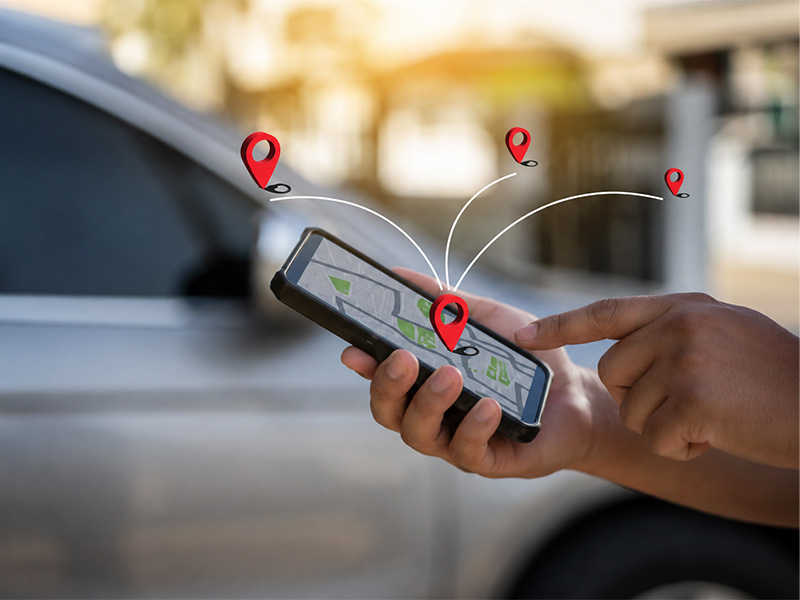
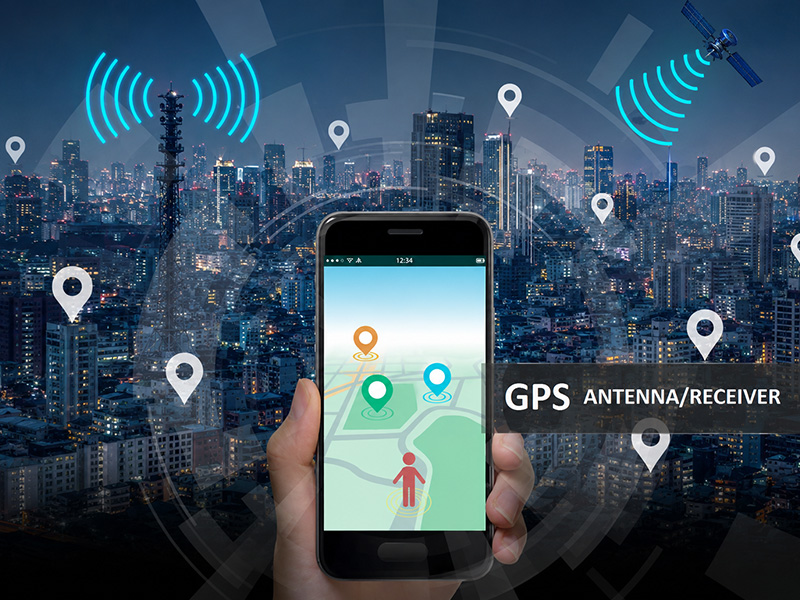
Nowadays, we can see that modern smartphones already have GPS inside them. When you open a map, your phone starts receiving signals from GPS satellites within seconds; it finds your location and shows it on the screen. It happens because your phone may also use the following:
Wi-Fi.
Mobile towers.
Bluetooth.
How Does GPS Work without a Network?
Sometimes, most of us think, Does it need an internet connection? GPS can also work without any kind of internet access, whether it is Wi-Fi or mobile data, because satellites send signals directly to your device; it doesn’t matter whether your phone data or Wi-Fi is on or off, GPS can still detect your location without any trouble. However, the internet is needed for:
Traffic updates.
Online search results.
Maps may not load properly.
So, GPS itself does not require the internet, but map applications usually work better with it.
How Does GPS Work for Location Tracking?
Location tracking is done by tracking the real-time location of the individual, vehicle or item. The tracking system makes use of GPS to update the location details. Applications include:
Cabs tracking in Uber, Ola, and Rapido.
Food delivery in Swiggy, Amazon, and FNP.
Vehicle tracking.
Fitness apps.
GPS tracking helps businesses and users know where something is in real time.
How Does GPS Work in Cars?
How does GPS work in cars? Basically, a car uses GPS for navigation and directions. It happens because when a driver enters a destination, the GPS shows the best route. It also gives voice directions and traffic updates. For example, we use navigation apps daily, like Google Maps. Everyone uses Google Maps to reach the right place in less time, and it uses signals from satellites so we can reach our destination quickly.
When we drive a car, we don't always look at Google Maps, so it also has a voice navigation system, and the voice from the device gives us a clear view of the route to our destination and also gives updates about traffic and all.
Advantages & Limitations of GPS
We all know how GPS works, but do you know it has some small problems? Apart from this, GPS is one of the best navigation systems today. Here are the Limitations and Advantages of GPS:
Advantages | Limitations |
Easy navigation | Weak signals inside buildings |
Saves time | Poor signals in tunnels |
Live tracking | Battery usage on phones |
Helpful during travel | Less accuracy during bad weather |
Conclusion
Now, you know “how does GPS work”. The Global Positioning System ( GPS ) helps people find places , track vehicles , and use maps easily . The satellites transmit signals, the devices receive them, and GPS determines your position within seconds. With GPS, travelling has been easy and fast.
It can be through our smartphones, through car navigation systems, or even through mobile applications; GPS helps us monitor our orders and transport daily. The science behind how GPS works simply involves the transmission of signals by satellites, which are received by the devices.
SkillSnap Learning provide online courses for CBSE classes 6 to 10. Students can download free study resources like NCERT Solutions, Sample Papers, Notes, Assignments, Syllabus, and more.