What is Coding for Kids? Everything You Need to Know
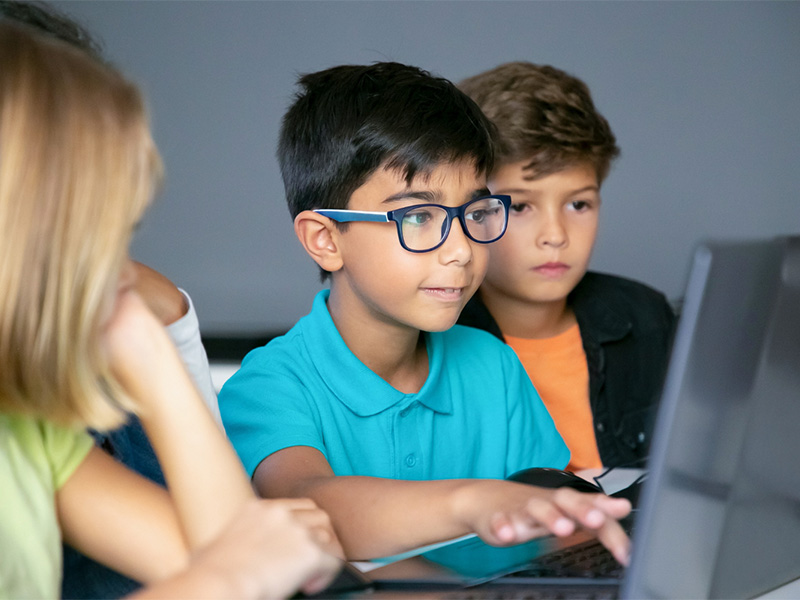
Coding for children is no longer just a hobby, but rather an important skill for the 21st century, on par with reading and math skills. By 2026, the need for digital literacy has become so sharp that coding education is being pushed at all stages of schooling and at home.
But what exactly is coding for kids? Is it really just about becoming a programmer, or does it offer something bigger? And how do you get started without spending a fortune?
This guide answers all of those questions. You will learn what coding for kids means, why it matters, at what age is the right time to start, and the best free resources available right now to put your child on the path to digital confidence.
What Is Coding for Kids?
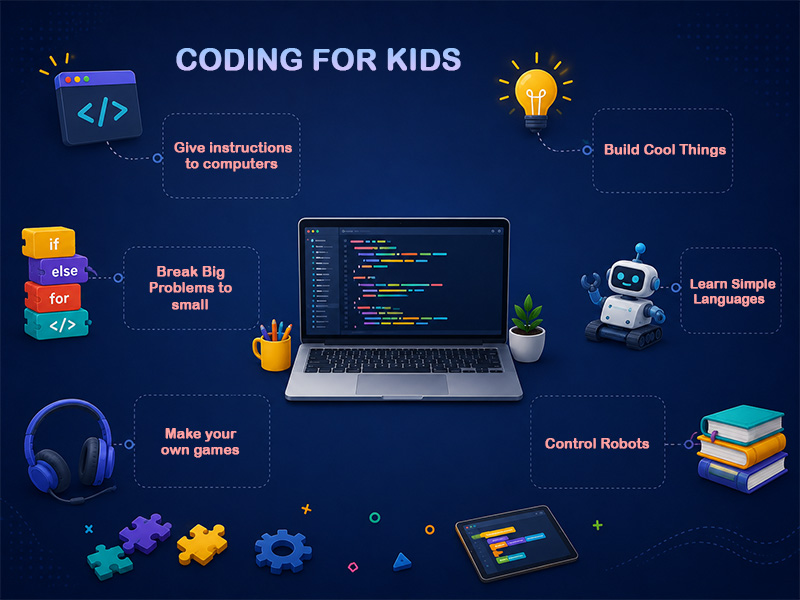
Coding for kids is defined as a method of training young people in writing and interpreting computer programming code in a manner that is appropriate for their age and level of understanding. Unlike adult coding that involves languages such as Python and JavaScript, kid coding utilises a series of block-based codes where children drag and drop codes without having to type.
Programming for children is not aimed at making every kid a programmer. Rather, it is about developing an approach to life, a way of thinking that is logical, innovative, robust, and solution-oriented.
Different Types of Coding for Kids
At the basic level, coding trains kids on how to communicate with computers. In the same way that we communicate through languages, coding is a method of communicating with machines using certain codes. Coding for Kids includes a variety of activities such as:
Block Coding: Using blocks that visually represent pieces of code.
Game Coding: Learning how to code using games and puzzles.
Robotics: Coding to control robots that can move and respond.
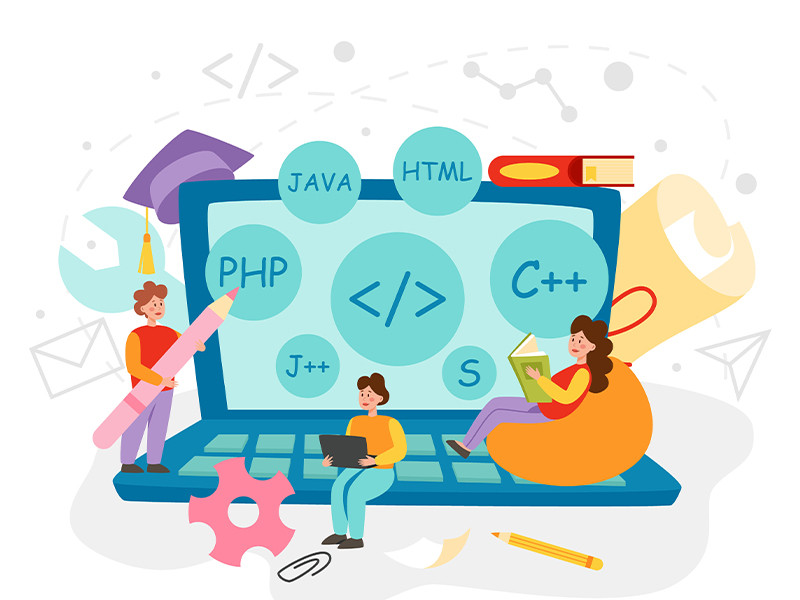
Text-based Coding: For older and more experienced students, coding in actual code using languages such as Python, HTML, or JavaScript.
Application and Game Development: Developing mobile applications and games using simplified software.
Why Is Coding Important for Kids in 2026?
Software, automation, and artificial intelligence have become an integral part of our lives in 2026. Virtually all sectors, such as medicine, finance, agriculture, design, and so forth, use technologies that are developed thanks to programming. Learning programming skills from childhood means learning to create and develop things in the new world, not only to consume technological products. These are the main reasons why coding is important for children:
Coding Builds Problem-Solving Skills
Learning to program helps children realise that complicated problems can be solved by breaking them down into simpler components. Decomposition is a problem-solving skill applicable in all areas of life. Programming helps kids develop logical thinking skills, error detection skills, and persistence until the problem is solved.
Coding Fosters Creativity
Unlike what many people think about coding being very technical, it is among the most creative things a kid can do. As a kid develops a game, creates an animation, or develops an application, he is using the digital platform to express himself.
Coding Strengthens Math and Literacy Skills
Research has proven that students who learn programming enhance their skills in mathematics. The ideas of variables, sequences, and logic coincide perfectly with mathematical thinking. Furthermore, programming involves accurate reading and writing skills, thereby developing literacy without the children’s awareness.
Coding Prepares Kids for Future Careers
The World Economic Forum estimates that the majority of children entering school today will work in jobs that do not yet exist. Many of those jobs will require at least a foundational understanding of technology. Learning to code equips kids with skills that are transferable across dozens of future career paths: engineering, medicine, law, design, business, and beyond.
Coding Builds Resilience and a Growth Mindset
Everyone who codes, be it an amateur or a professional, comes across bugs. Programming helps kids learn the art of accepting failure as a natural part of life. It fosters patience and determination to try again.
Coding Is Fun and Engaging
Today’s coding learning platforms are child-friendly and use games, storytelling, characters, and challenges to make the learning process fun. Once children understand that they can create the games that they enjoy playing or even bring their favourite characters to life, their motivation levels increase significantly.
What Age Should Kids Start Coding?
There is no right age to start coding, but here is a general guide by developmental stage:
Ages 4–6: Pre-Coding and Computational Thinking
By this stage, children are too young to start coding on the computer, but are able to develop their thinking skills, which are needed later when they code. For example, sorting, sequencing, and recognising patterns can be done during play or using board games such as Robot Turtles.
Ages 6–8: Block-Based Coding Begins
It is the best age for children to start programming visually using blocks. With tools from SkillSnap Learning, kids learn to code through activities like creating animations, storytelling, and games. The basics include sequencing, loops, and event handling.
Ages 8–12: Deeper Block-Based and Intro to Text Coding
Children in this range are ready for more complex logic: conditionals, loops, functions, and variables. Scratch (the full version) is the gold standard here. Older kids in this group can begin exploring Python or HTML with guided support.
Ages 12–16: Text-Based Coding and Real Projects
Teenagers are ready to write real code. Python is considered the best language to start with because of its clear syntax and flexibility. At this point, children will be able to create projects such as websites, applications, games, and data analysis tools that they can share with the whole world.
Ages 16+: Advanced Programming and Specialisation
Teenagers can start focusing on things they love, like web development, machine learning, cybersecurity, game development, or creating apps for phones. They can get involved in open-source projects and create portfolio-quality work.
Common Myths About Coding for Kids
Coding and Math have a similar basis in logic; many coding fundamentals taught to beginners have little to do with numbers and arithmetic. Kids who find it difficult to learn math may be brilliant coders. There is no gender in coding. Great female programmers such as Ada Lovelace and Grace Hopper contributed to the creation of computers. Just an ordinary laptop, Chromebook, or even tablet computer will be enough.
There are lots of platforms where you can teach coding without any software download. Even though learning how to code early helps build a solid foundation, it’s never too late to learn. There are many famous developers who coded for the first time in their teenage years or even later in their lives. Coding is an art. It enhances creativity by helping kids manifest their imaginations in the digital world.
Conclusion
Learning to code for children will be essential in future. No matter whether your child becomes a software engineer, an architect, a doctor, or a designer in the future, learning how to think logically and solve problems creatively using coding will always benefit them.
The threshold of coding for kids has never been lower. Thanks to high-quality free materials, user-friendly apps for parents, and age-appropriate coding tools available for each developmental stage, now is the best time ever to teach your child to code.
Start with small steps. Start right now. Let curiosity take the lead. Join our Online Coding Classes and become future-ready.