Types of Fossils: Cast, Trace, Animal, Mould, and Others
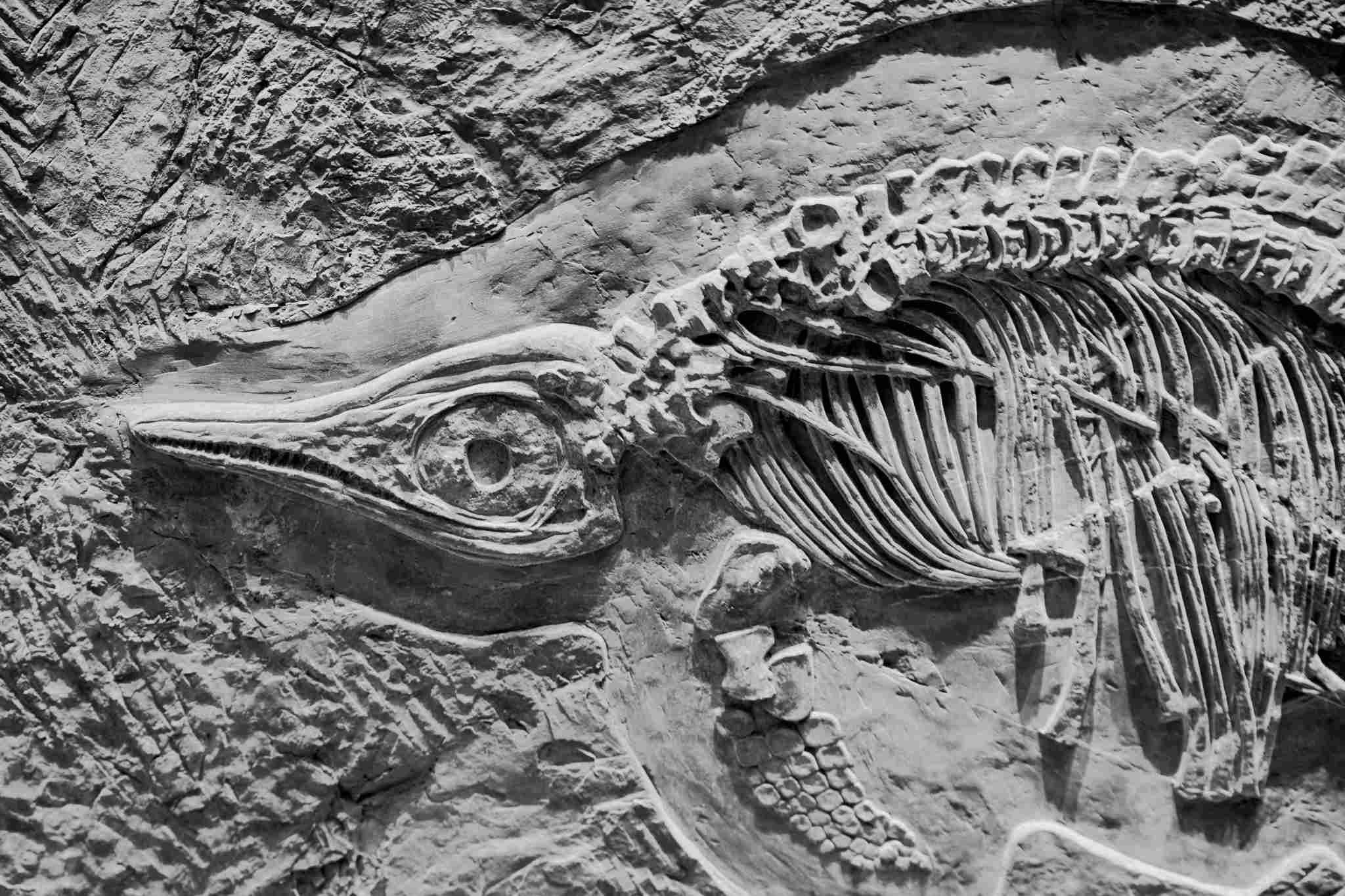
Types of fossils help us to understand different ways in which ancient plants, animals, and other organisms have been preserved over a million years. Fossil fuels provide valuable evidence of life on Earth in the distant past and help scientists study evolution, ancient environments and extinct species. It depends on the condition of the environment under which an organism is preserved; fossil fuels can be formed in many ways.
In this article, we will be discussing the types of fossils.
Different Types of Fossils
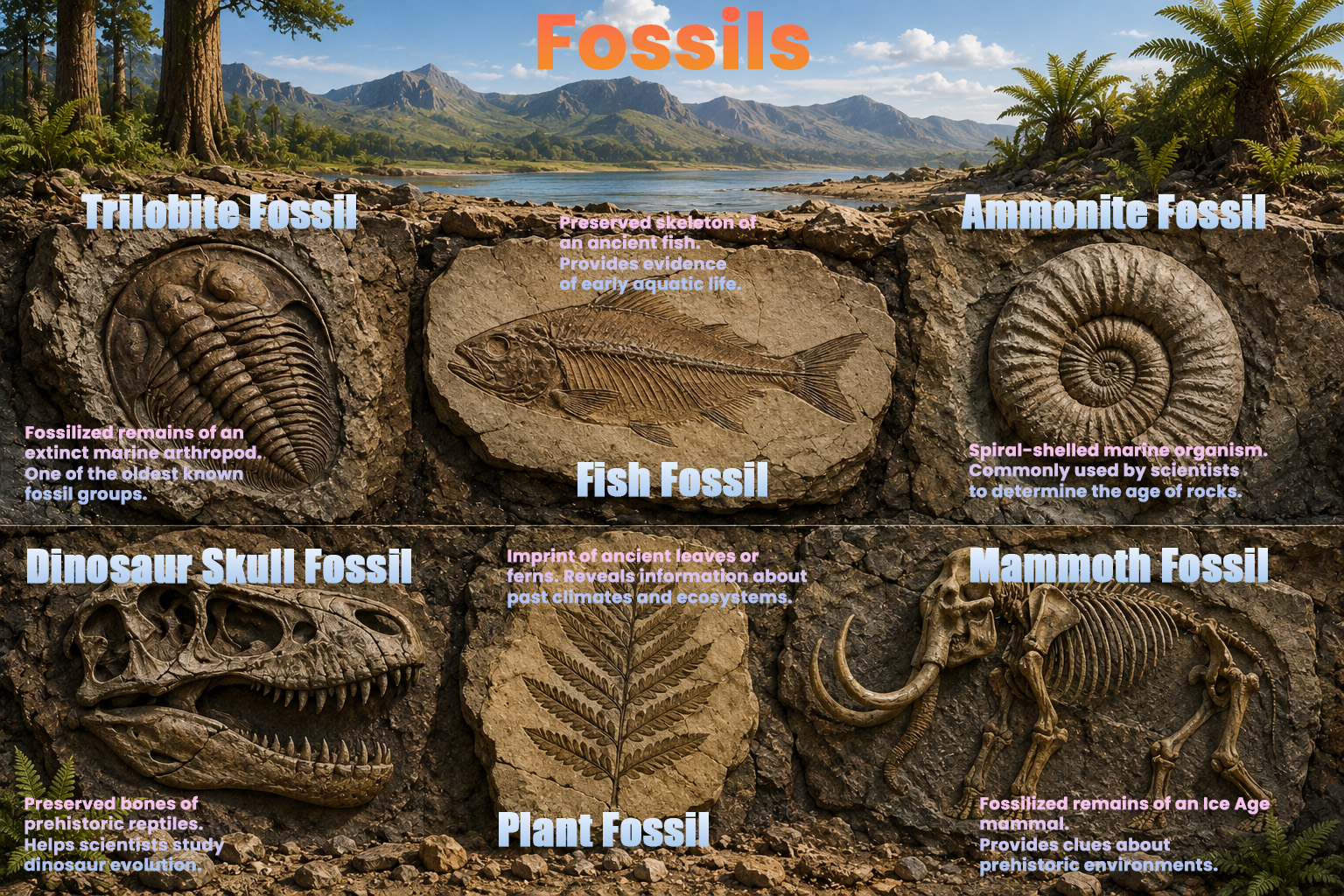
Types of fossils refer to the different ways in which the remains or traces of ancient plants and animals are preserved over a long period of time. These fossils provide necessary evidence that life existed on Earth millions of years ago and help scientists learn about evolution, extinct species and past environments. There are five types of fossils, and they are:
Body Fossils: Soft Parts
The first type of fossils includes body fossils, which preserve the soft parts of animals or other living organisms, such as skin, muscles, hair, and internal organs. These fossils are very rare because mostly the soft body tissue decays very quickly after an organism dies, and if these fossils are found, they are trapped in amber, frozen in ice or preserved in dry environments, soft tissues can survive for thousands or millions of years. These fossils provide scientists with information about the appearance, structures and lifestyles of ancient organisms.
Molecular Fossils
The other type of fossils is molecular fossils, the chemical traces or organic molecules that are left behind by the ancient organism. The fossils aren’t preserved in their original structure or shape of animals and trees, but contain biological compounds that provide evidence of past life. This evidence helps scientists understand ancient environments, the evolution of living organisms, and the history of the Earth.
Fossils Trace
These types of fossils are those fossils preserved signs of an organism rather than its actual remains. These fossils include footprints, burrows, nests, trails, and feeding marks left behind by ancient plants and animals. Traces of fossils provide important evidence about how the organisms lived, moved, and interacted with the environments they lived in.
Pseudofossils
These types of fossils are sometimes confused with pseudofossils, which are natural rocks that resemble remains or traces of a living organism, but they are not actual fossils. These formations are created by geographical processes rather than by ancient plants and animals. Pseudofossils do not provide evidence about how the organism used to live, move, and interact with the environment.
Conclusion
These four types of fossils help scientists understand how ancient plants and animals were preserved for millions of years. Each type provides very important information about the Earth’s history, past environments and the evolution of life. This information helps scientists gain important clues about the organisms that lived long ago and understand our planet's past. For more information about topics like these, visit SkillSnap Learning. Here you will find more information on the related topics and much more information on other topics as well.