What is a Fossil? Its Formation and Preservation Process
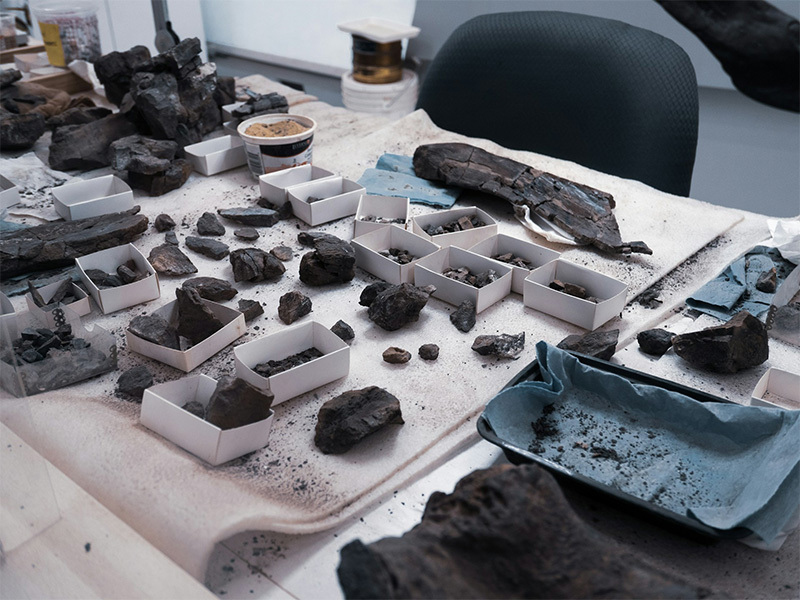
What is a fossil? It is a naturally conserved remnant or trace of an ancient living thing that existed millions of years ago. They are found in the sedimentary rocks, amber ice, and oil all around the world. When a plant or animal dies, it gets buried in sand, mud, and sediment. It can include the bones of dead animals, shells, leaves, plants, or even marks left by living organisms.
The study of fossils helps scientists learn about how life existed and how different species changed over the period of time. The study of fossils provides important clues about the ecosystem, climate and geographical events that shape our environments.
What is a Fossil?
Fossils are the remains preserved by nature, the impressions of living organisms, plants and animals that lived on the earth for thousands or millions of years. They are commonly found in the sedimentary rocks and can include bone, teeth, shells, leaves, footprints and other signs of the ancient period. Usually, they are formed when a living organism dies, and its remains are buried under the soil and mud over a long period.
These fossils provide important evidence which is linked to the history of life on Earth.
With the study of fossils, scientists can learn about existing species, ancient ecosystems, and how plants and animals have evolved over a period of time.
It can also provide information about past climate and environmental changes and major events that shape planets.
Why Do We Study Fossils?
To understand “what is a fossil”, we must learn why we study fossils. Fossils are valuable records of the ancient period, which help scientists learn about the plants, animals, climates and environments millions of years ago. With the help of studying fossils, scientists can discover how life was formed and changed over a period of time. It provides us with information on existing evidence of organisms and shows how they are connected to modern plants and animals. After studying fossils, scientists reconstruct the ancient ecosystem and gain insights into the history of life on Earth.
How are Fossils Formed?
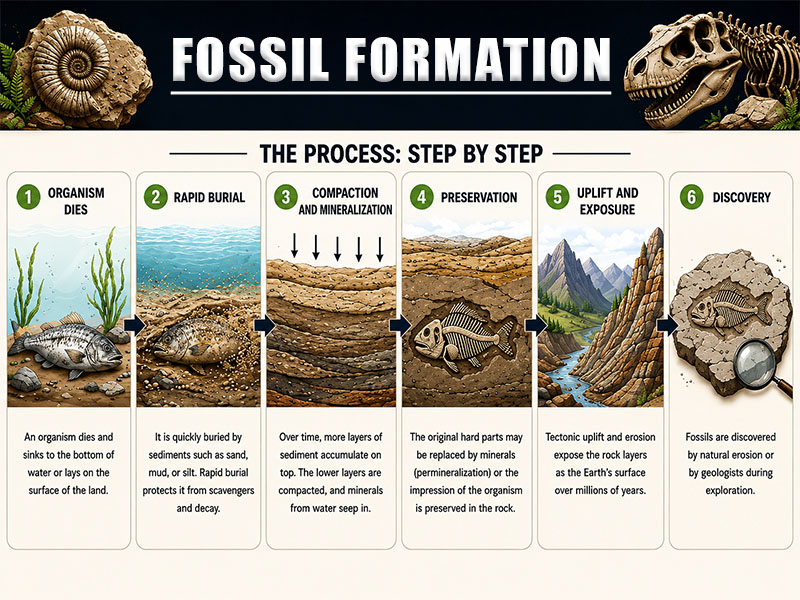
This is the most common question among students: “What is a fossil and how are they formed?” Fossils are formed when the living organisms die, and their remains are buried in a layer of mud, sand or sediments. These burials protect the remains from weather, scavengers and decay. Over a period of time, more layers of sediment build up on top of the remains. When these layers harden in the rocks, minerals gradually replace or fill the organic materials, preserving their shape and structure. The process can take millions of years. In most cases, only impressions, footprints and traces of the organism are preserved instead of the actual substance.
Top 4 Ways of Fossil Preservation
To understand what fossils, how they are preserved. The four main ways of fossil preservation are as follows:
Petrification
Petrification is a type of preserving fossils in which minerals slowly replace the original remains of plants and animals. Over a period of time, the remains turn into a rock-like fossil and keep their original shape and structure. These petrified fossils provide information to scientists about the organisms that lived in the distant past and the environments in which they existed.
Compression
Compression is another type of preserving fossils, which occurs when plants, animals and other living things die and get buried under a layer of sediments. With the period of time t, the pressure builds on them, and the remains are flattened, leaving a thin fossil impression. In most of the cases, some organic materials are still preserved.
Moulds and casts
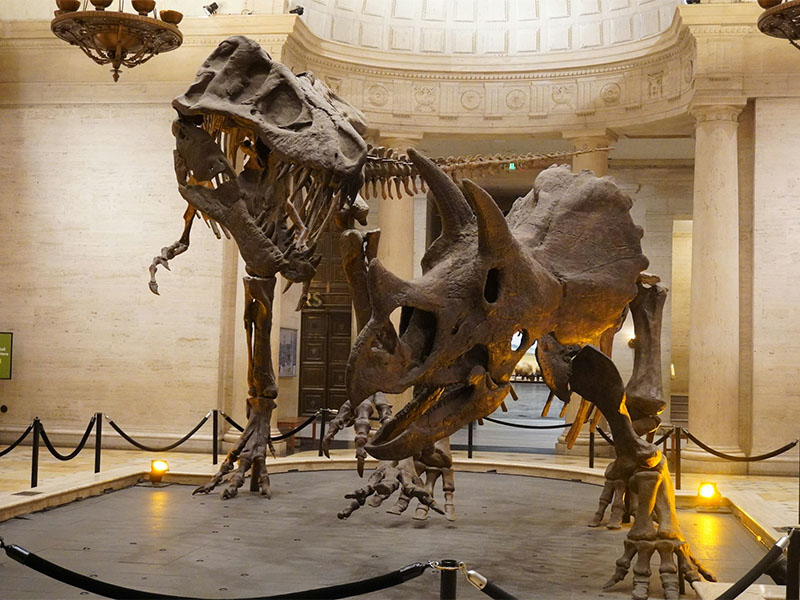
One of the third ways to preserve fossils is Moulds and casts, formed when an organism is buried in the sediments and later decomposes. The space which is left behind creates moulds, which are an impression of the organism. When the space gets filled with minerals and sediments, they form casts, creating a replica of the original organisms.
Preserved remains
After all the ways to preserve fossils, the final thing we get is the preserved remains, which contain parts of the original organism. These fossils are formed when plants and animals are trapped in substances like ice, amber, tar and dry environments that prevent decay. That’s why the remains get preserved for millions of years.
Conclusion
Understanding “What is a Fossil?” helps us to learn about the remains, ancient life and Earth’s history. Fossils are important records of ancient life on Earth, helping scientists discover extinct animals and plants, past environments and the process of evolution. They can be preserved in many ways, such as petrification, compression, moulds and casts, and preserved remains.