How To Become A Topper in Class 8 in 2026 (Proven Study Tips)
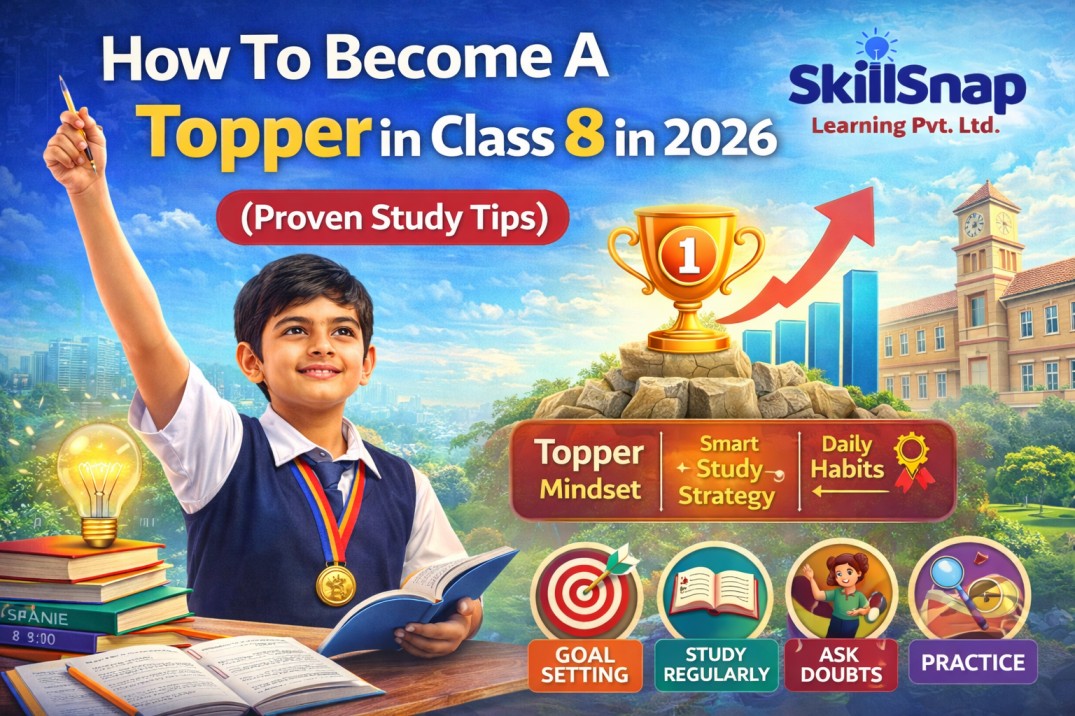
If you are wondering How To Become A Topper In Class 8, you are not alone. Many students want to score high marks but often feel confused about where to start. The truth is, becoming a topper is not about studying all day but about following the right strategy consistently.
In this guide, you will learn simple, practical, and effective methods that will help you understand How To Become A Topper In Class 8 step by step. If you follow these tips daily, you can improve your performance in exams.
How To Become A Topper In Class 8?
Before learning How To Become A Topper In Class 8, it is important to understand what being a topper really means. A topper is not someone who studies 10–12 hours daily, but someone who studies smartly and understands concepts deeply. They focus on clarity, regular revision, and proper answer writing. This approach helps them remember topics for a longer time and perform well in exams without stress.
Class 8 Subjects
Class 8 subjects lay the foundation for higher education. Each subject has its own challenges, and you might find some difficult topics in Class 8. Overcoming these challenges and scoring good marks can be achieved through smart studying. Scoring 100% is not about studying for long hours, but about effective learning. The secret to becoming a topper in Class 8 lies in focus, consistency, and smart study techniques. Here are the Class 8 subjects and their important topics and chapters:
|
Subjects |
Important Topics |
Why They Matter |
|
Mathematics |
|
These form the foundation for high school Algebra and Geometry. |
|
Science |
|
Bridges the gap between general science and specialised Biology, Physics, and Chemistry. |
|
Social Science |
|
Essential for understanding how the modern world and your country's legal systems function. |
|
English |
|
Focuses on moving from simple storytelling to structured, formal communication. |
|
Computer Science |
|
Provides the technical literacy needed for a digital-first world. |
|
Hindi |
|
Focus on the “Bhavarth” (deeper meaning) of poems and mastering formal letter writing formats. |
|
Sanskrit |
|
Sanskrit is all about the "Vibhakti" (cases). If you master the tables, translation becomes easier. |
7 Steps to Become a Topper in Class 8
Becoming a topper in Class 8 requires consistent effort, study techniques, and dedication. It is all about studying effectively. Here are the key strategies to help you achieve 100% marks in Class 8:
Make a Smart Study Timetable
Creating a proper study timetable is the first step in How To Become A Topper in Class 8. A good timetable helps you stay organised and ensures that all subjects are covered equally without last-minute pressure. Instead of making a very strict schedule, create a flexible plan that you can follow every day. Include time for studying, revision, and short breaks so that you don’t feel tired or bored.
Understand Concepts Clearly
If you truly want to know How To Become A Topper In Class 8, you must focus on understanding instead of memorising. Rote learning may help in the short term, but it does not build strong knowledge. Try to understand each topic in your own words and ask questions whenever you feel confused. This habit will make your basics strong and help you solve any type of question in exams.
Practice Writing Answers Daily
Writing practice plays a very important role in scoring high marks. Many students know the answers but lose marks because they are not able to present them properly in exams. Make it a habit to write answers daily, especially for subjects like English and Social Science. This will improve your speed, accuracy, and confidence during exams.
Revise Regularly
Revision is one of the most important steps in How To Become A Topper in Class 8. Without revision, it is easy to forget what you have studied, especially during exams. Try to revise for at least 10–15 minutes daily and do a full revision every week. Making short notes can also help you quickly review important topics before exams.
Pay Attention in Class
Classroom learning is very important when it comes to understanding how to become a topper in Class 8. What you learn in class becomes the foundation of your preparation. Listen carefully to your teacher, take proper notes, and do not hesitate to ask questions. Clearing your doubts early will save a lot of time during revision.
Avoid These Common Mistakes
Many students work hard but still fail to score high because of common mistakes. These include studying only before exams, ignoring weak subjects, and not practising enough questions. If you avoid these mistakes and stay consistent with your studies, you will already be ahead of many students in your class.
Stay Consistent and Positive
Consistency is the key to understanding how to become a topper in Class 8. Studying a little every day is much more effective than studying for long hours occasionally. Stay positive and believe in yourself, even if you don’t see immediate results. With regular effort and the right mindset, success will definitely come.
Subject-wise Tips to Become a Topper in Class 8
Here are the subject-wise tips to score 100% in Class 8:
Mathematics
Mathematics requires understanding basic concepts like number theory, geometry, and algebra thoroughly. The more you practise, the better you can solve problems. Solve questions from topics like mensuration, algebraic expressions, and linear equations. Start with the easier questions first and solve the complex ones later.
Science
Science in Class 8 transitions into formal Physics, Chemistry, and Biology. In Biology, a well-labelled diagram can get you full marks even if your explanation is brief. Practise diagrams of the Human Eye , Cell Structures , and Reproductive Systems . Always ask, Where do I see this in real life?
English
For Letters, Notice Writing, and Essays, memorise the format perfectly. Even if your content is average, a perfect format secures 60-70% of the marks. In “Unseen Passages,” read the questions first, then scan the text. It saves about 10 minutes of exam time.
Social Science
-
History: Don’t memorise dates in isolation. Create a horizontal timeline on your wall. Seeing “The Revolt of 1857” followed by the “Formation of Congress” helps you understand the cause and effect.
-
Geography: Use the “Pencil Trace” method. Trace maps of minerals, soil types, and industries until you can draw them from memory.
-
Civics/Polity: Relate chapters to current news. If you’re reading about the Parliament, look up who the current Speaker is. It makes the theory feel real.
Hindi and Sanskrit
Master the Hindi and Sanskrit grammar rules to understand sentence structure and syntax. Memorise new words, meanings, and use them in sentences. Understand the meaning and summary of the stories and poems. Regularly practise writing applications, essays, and letters in Sanskrit and Hindi.
Conclusion
Now you clearly understand how to become a topper in Class 8 and the steps you need to follow. It is not about studying harder but about studying smarter with the right plan and consistency. If you apply these tips in your daily routine, you will notice a big improvement in your understanding and exam performance.
Want Extra Help to Become a Topper?
Self-study alone can feel confusing, especially when you don’t have proper guidance or someone to clear your doubts instantly. That’s where the right support can make a huge difference in your learning journey. Join our online courses from SkillSnap Learning for Classes 6 to 10, where learning becomes simple and effective. You get clear explanations, regular practice, and full support to become a topper in Class 8. Start today and take a confident step towards becoming a topper in your class.